The First Taste: My Malaysian Konnyaku Memory
I still remember the first time I made konnyaku jelly. It was one of those balmy Malaysian afternoons when the sun poured in through the kitchen window like warm syrup. The air smelled faintly of pandan leaves from a pot bubbling on the stove, and my mother had just returned from the market with a pack of brightly labelled Happy Grass Konnyaku Jelly Powder, and it was during the mid-autumn festival where I have made a lot of mooncakes.

“Wanna try making this?” she asked with a smile, placing the packet in my hands. I had never heard of konnyaku jelly before, but I was intrigued. That first batch was made with fresh berries — simple, nostalgic, and refreshingly bouncy. It was the texture that stayed with me. Unlike anything I had tasted before — firm yet yielding, a dessert that felt alive on the tongue.

Since then, I’ve reimagined konnyaku jelly many times — but this version, infused with fresh orange juice and studded with real orange cubes, is one of my absolute favourites. It’s a taste of my tropical roots, but with a fresh twist that’s both elegant and playful.
What Is Konnyaku?

Konnyaku is a jelly-like substance derived from the root of the konjac plant (Scientific name: Amorphophallus Konjac) as well as called as Devil’s Tongue — native to East and Southeast Asia. It’s long been celebrated for its health benefits: high in fiber, low in calories, and beloved for its unique chew.
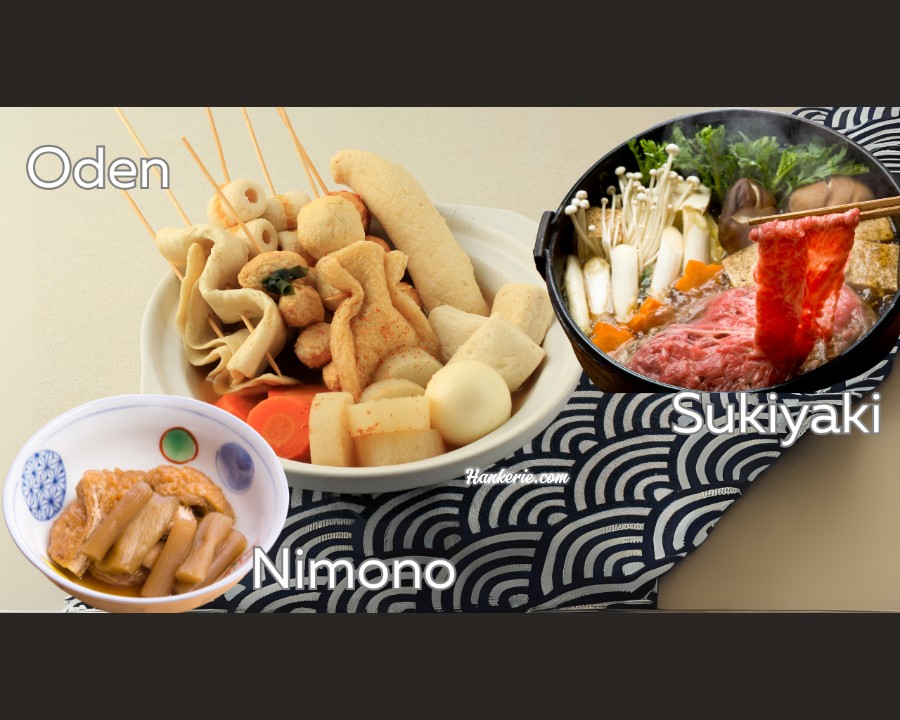
In Japan, konnyaku appears in everything from hot pots to noodles, such as in Oden, Nimono and Sukiyaki as the picture. In Southeast Asia, however, it’s most commonly known as a dessert — usually paired with fruity flavours and poured into whimsical moulds that make children giggle and adults nostalgic.
Unlike gelatin, konnyaku sets firmly at room temperature and holds its shape even in warm climates. Its slightly rubbery texture makes it especially fun to eat. And when combined with malic acid — a natural compound found in apples — the result is a tart, vibrant jelly that dances on your palate.
Preparing the Orange: Cutting Sunshine into Cubes
There’s something poetic about cutting a fresh orange. You’re not just slicing fruit; you’re unwrapping sunlight.
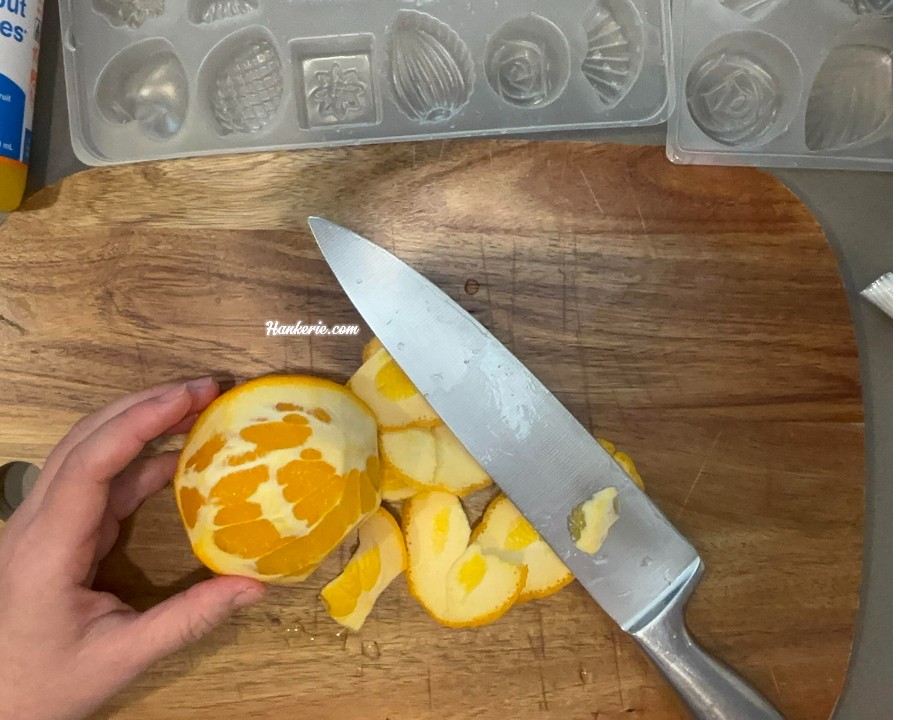
Step-by-step:
- Choose the Right Orange: A sweet, juicy navel orange works best. Look for firm skin and bright colour.
- Slice Top and Bottom: Trim both ends to create a flat surface.
- Peel and Pith: Stand the orange upright and slice downwards to remove peel and white pith.
- Segment the Fruit: Slice between membranes to release clean segments.
- Cube It: Cut each segment into small cubes — not too small, just enough to nestle perfectly in your mould.
Set these radiant orange cubes aside. These will be your little gems inside the jelly.
Balancing the Jelly Base: Water, Juice, and Powder
This is where the magic happens — where science meets sweetness.
In a separate pot, pour in:
- 125 ml fresh orange juice (no pulp)
Then, slowly add:
- 500 ml plain water, stirring constantly. This step is crucial — the gradual addition and stirring prevent lumps from forming, ensuring a silky smooth jelly base.
Bring the mixture to a boil over high heat. Once it bubbles, reduce to low heat and simmer gently while stirring for 3 minutes. This activates the konnyaku powder’s gelling power.
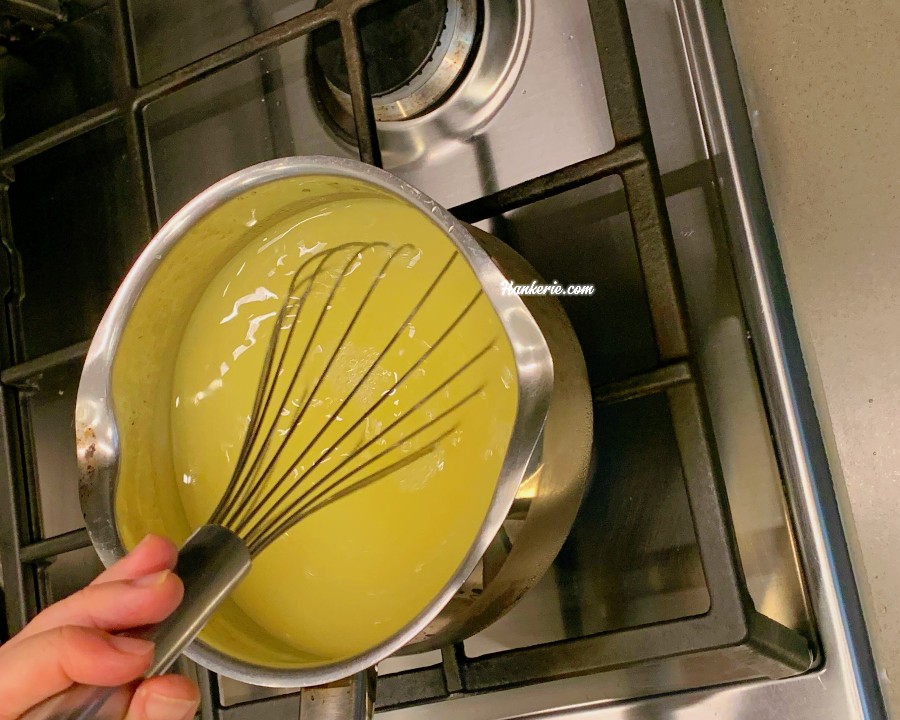
Turn off the heat.
Then, stir in:
- ½ packet of malic acid (from the jelly powder packet)
This final ingredient adds that signature fruity tang, heightening the natural citrus notes of the fresh juice. Stir until fully dissolved and well combined.
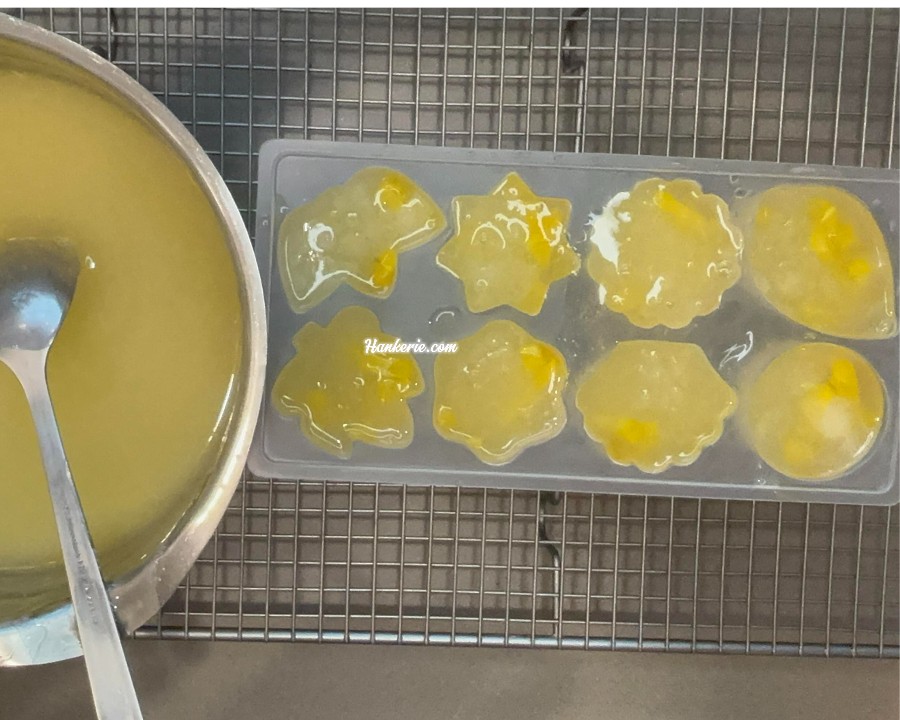
The Art of Assembly: Building Each Jelly
Now comes the joyful part.
- Place your prepared orange cubes into each mini mould.
- Carefully pour the warm jelly mixture over the fruit until the moulds are full.
Let the jellies sit at room temperature until they begin to set. Then, transfer them to the refrigerator. For best results, chill overnight.
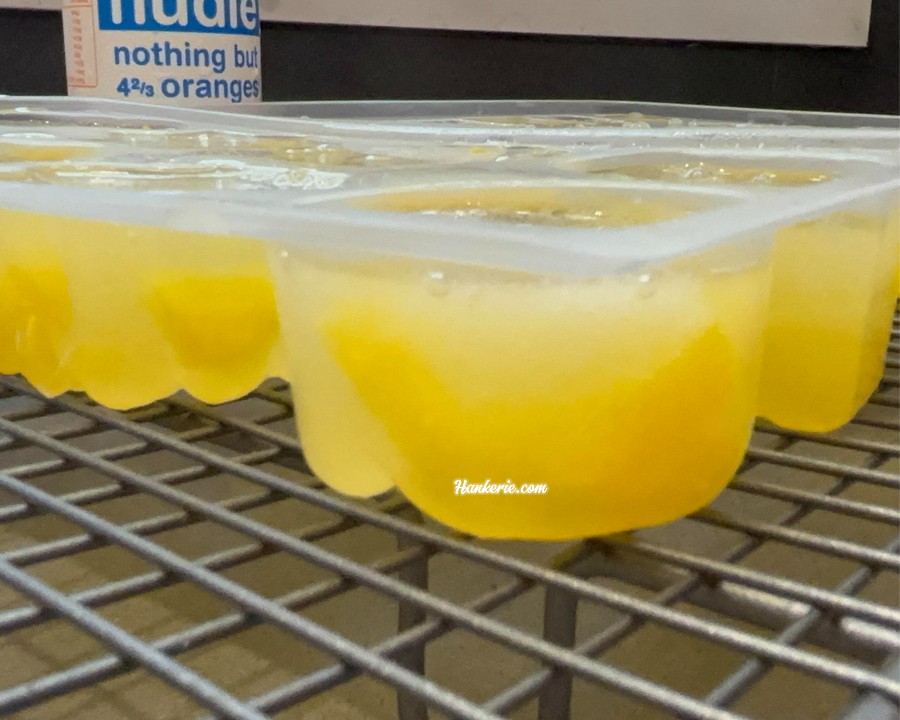
The next day, you’ll unveil perfectly clear jellies, each one showcasing the suspended orange cubes like sunshine trapped in glass.
A Treat Worth Sharing
Every time I make these, I think of that first kitchen experiment with my mother. From canned syrup to fresh citrus, it’s been a full-circle moment. I now make them for my son, and his eyes always light up at the wobble of each jelly.
If you’re new to konnyaku jelly, this orange version is a beautiful place to start. It’s easy, forgiving, and absolutely stunning to serve. Whether you’re preparing a dessert for a dinner party or just a fun snack on a warm afternoon, these jellies bring joy in the simplest form.
Try it — and let me know what fruit you’d float next in your konnyaku creations.
🍊 Mini Orange Konnyaku Jelly
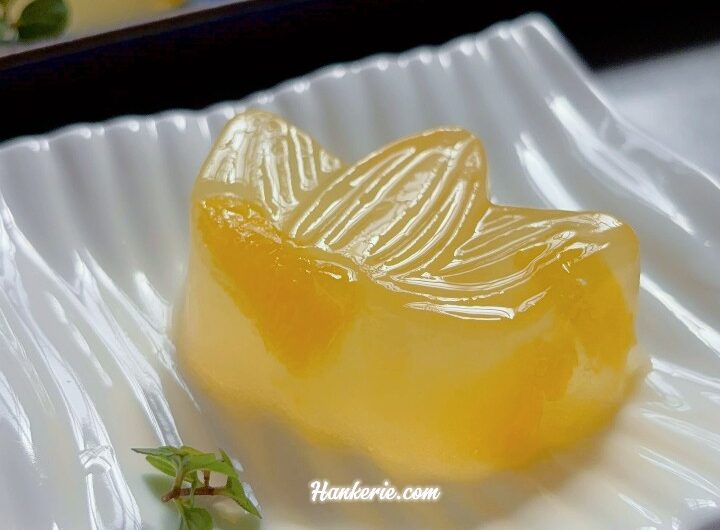
Mini Orange Konnyaku Jelly
Course: Dessert, Gluten Free, KetoCuisine: Japanese, MalaysianDifficulty: Easy4
servings15
minutes5
minutes200
kcalIngredients
½ packet Happy Grass Konnyaku Jelly Powder
500 ml plain water
125 ml fresh orange juice (no pulp)
Fresh orange flesh (peeled and cubed)
½ packet malic acid (from the jelly pack)
Directions
- Prepare the orange flesh.
- Start by cutting a fresh orange
- Slice off the top.
- Carefully trim away the peel and white pith using a small knife.
- Segment the orange by cutting between the membranes.
- Cut the segments into small cubes. Set aside.
- Prepare the konnyaku jelly mixture.
- In a clean pot, pour in ½ packet of Happy Grass Konnyaku Jelly Powder.
- In separate pot, add 125 ml fresh orange juice (no pulp). Slowly add 500 ml of plain water, stirring constantly to prevent lumps. Bring the mixture to a boil over high heat.
- Once boiling, reduce to low heat, and simmer while stirring for 3 minutes.
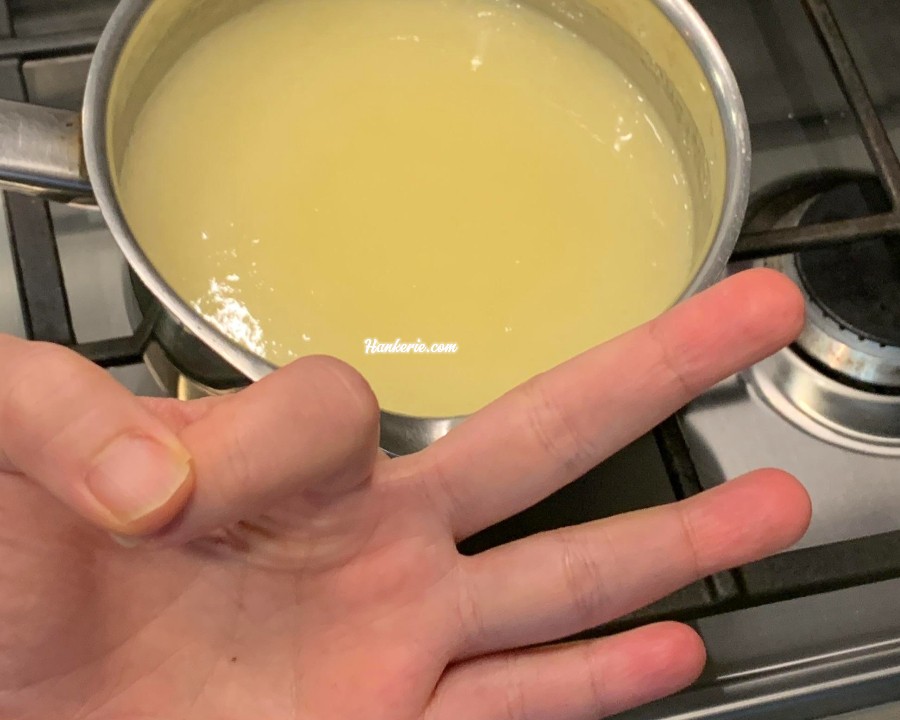
- Turn off the heat.
- and ½ packet of malic acid.
- Stir until everything is fully dissolved and well mixed.
- Assemble the jellies.
- Place the prepared orange cubes into each mini jelly mould.
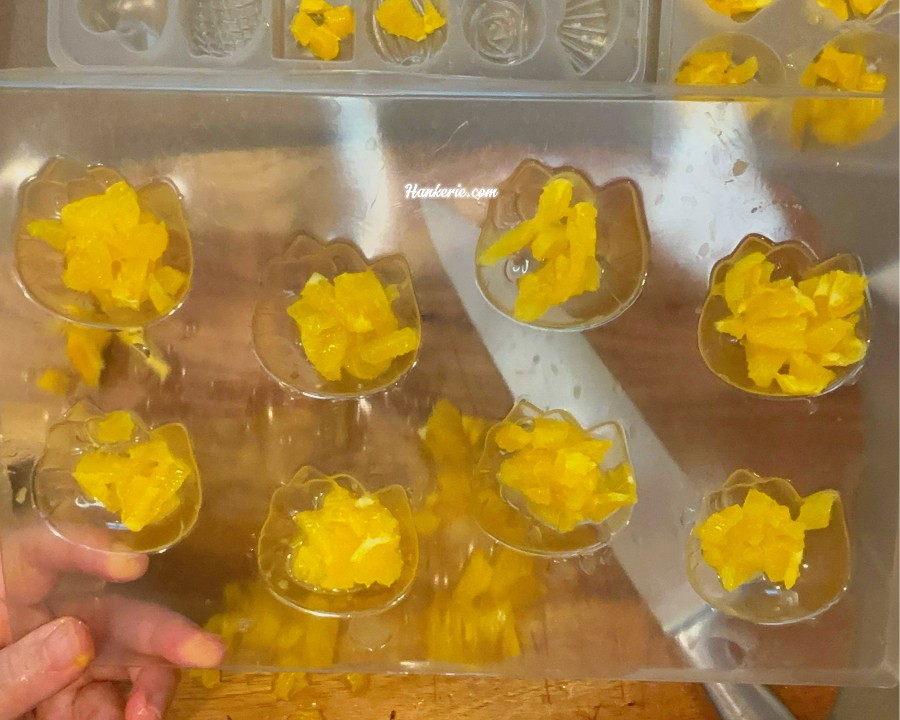
- Pour the warm jelly mixture into the moulds until full.
- Let the jelly set at room temperature, then transfer to the fridge.
- Chill for at least a few hours, preferably overnight for the best texture and flavour.
Recipe Video
Notes
- Dissolving the Powder: Mix the konnyaku powder thoroughly with the cold water before heating to prevent lumps. Stir continuously until fully dissolved.
- Boiling and Simmering: Bring the mixture to a rolling boil over high heat while stirring. Then, reduce to low heat and simmer for a specific duration (3 minutes) while continuing to stir. This step is essential for activating the gelling properties of the konnyaku.
- Timing of Adding Ingredients: Turn off the heat before adding the orange juice and malic acid. This helps preserve the fresh flavor of the juice and ensures the acid reacts properly.
- Complete Dissolution: Stir the mixture well after adding the orange juice and malic acid until everything is fully dissolved and the liquid is homogenous.
- Even Distribution of Orange Flesh: Place the cubed orange flesh into the moulds before pouring in the warm jelly mixture for even distribution.
- Setting Process: Allow the jelly to cool and start setting at room temperature before transferring to the refrigerator for thorough chilling.
- Chilling Time: Chill for at least a few hours, preferably overnight, for the best texture and flavor development.
Tools & Ingredients Used in this recipe
Happy Grass Konnyaku Original Jelly Powder 280g (AU) https://amzn.to/4j6nsbd
Jelly Molds / Chocolate Molds (AU) https://amzn.to/3XLzuyi
2 Pcs Duck Chocolate Silicone Mold Silicone Duck Shape (AU) https://amzn.to/4cunszh
4 Pcs Fruit Shaped Jelly Molds, 3D Mini Fruits (AU) https://amzn.to/4coVZ1Y
Stainless Steel Saucepan with Glass Strainer Lid (AU) https://amzn.to/3IUJxsZ
The Science Behind the Wobble:
The magic of konnyaku lies in its unique composition. The glucomannan fiber in the konjac powder has an incredible ability to absorb water, forming a viscous gel when heated. The addition of an alkaline substance (often present in commercial konnyaku powder preparations or added separately) causes the glucomannan molecules to cross-link, creating a strong, elastic network that gives konnyaku its characteristic firmness and chewiness.

The malic acid plays a crucial role in this orange jelly recipe. The acidity of the orange juice can sometimes hinder the gelling process of konnyaku. Malic acid helps to create a more favourable pH environment for the glucomannan to set properly, ensuring a firm and stable jelly. It also enhances the tartness of the orange flavour, creating a more balanced and refreshing taste.
My Ongoing Konnyaku Adventures:
Even after perfecting this orange konnyaku jelly recipe, my fascination with this versatile ingredient continues. I’ve experimented with savoury konnyaku dishes, adding it to stir-fries for a unique textural element and incorporating it into vegan “seafood” preparations. I’ve also explored different flavour combinations for sweet konnyaku jellies, from tropical fruit medleys to creamy coconut concoctions.
Making konnyaku jelly is more than just following a recipe; it’s a journey of understanding textures, flavours, and the fascinating science behind food. It’s a connection to my early experiences in Malaysia, a reminder of the vibrant culinary landscape that first introduced me to this wonderful ingredient.
I hope this detailed guide and my personal story inspire you to try making your own orange konnyaku jelly. It’s a surprisingly simple process with incredibly rewarding results. The burst of fresh orange flavour, the satisfying chewiness, and the beautiful translucent appearance make it a truly captivating treat. So, gather your ingredients, embrace the wobble, and enjoy the delicious journey of creating your own konnyaku revelations.
Starting to make konnyaku jelly beacause of the healthy mooncake into crystal mooncake recipe
Ah, a fellow explorer drawn to the fascinating world of konnyaku by the allure of healthy and beautiful crystal mooncakes! That’s a fantastic reason to embark on this jiggly adventure. The translucence and delightful chewiness of konnyaku make it the perfect foundation for those ethereal treats.
It sounds like you’re already envisioning the potential – the light, refreshing nature of konnyaku replacing heavier fillings, creating mooncakes that are both visually stunning and guilt-free. The “crystal” aspect is precisely what makes konnyaku so appealing for this application. Its ability to take on a clear, almost glass-like appearance allows the colors and textures of the filling to shine through, creating miniature edible jewels.
Before you dive headfirst into the crystal mooncake recipe, taking the time to understand the fundamentals of konnyaku jelly making is a wise move. Just like a strong foundation is crucial for any building, a good grasp of konnyaku’s properties will set you up for success in creating those delicate and delicious mooncakes.
Think of it this way: your journey into making orange konnyaku jelly, as detailed in the previous post, wasn’t just about creating a citrusy dessert. It was an invaluable apprenticeship in the art of coaxing konnyaku powder into its gelled form. You learned about the delicate balance of powder to liquid, the importance of heat activation, and the role of acidity in the setting process. These are all fundamental principles that will directly translate to your crystal mooncake endeavors.
For instance, you now understand:
- The Importance of Dissolving the Powder: Preventing lumps is key to a smooth, crystal-clear konnyaku base for your mooncakes. Your experience with the orange jelly taught you the importance of stirring the powder thoroughly into the water before heating.
- The Role of Boiling and Simmering: You know that the konnyaku mixture needs to reach a rolling boil and then simmered to fully activate its gelling properties. This ensures your mooncake “skin” will have the right firmness and chewiness to hold its shape.
- The Impact of Additional Ingredients: Your experimentation with orange juice and malic acid highlighted how other ingredients can affect the setting and flavor of konnyaku. This knowledge will be crucial when you start incorporating natural colorings and subtle flavorings into your crystal mooncake recipe.
Now, as you transition from crafting vibrant orange jellies to creating delicate crystal jelly mooncakes, consider these points: You can check out the recipe at this blog here.
- Clarity is Key: For crystal mooncakes, achieving maximum translucence in your konnyaku is paramount. Ensure your water is clean and clear, and strain the cooked konnyaku mixture through a fine-mesh sieve before pouring it into your mooncake molds. This will remove any undissolved particles and contribute to a flawless, glass-like finish.
- Subtle Flavors: While the orange jelly was intentionally citrusy, crystal mooncakes often feature more delicate and nuanced flavors that complement the fillings. Think floral notes like osmanthus or pandan, or subtle sweetness from natural sources.
- Focus on the Filling: The beauty of crystal mooncakes lies in showcasing the filling. Choose fillings with vibrant natural colors and interesting textures. Think red bean paste, matcha paste, taro paste, or even fresh fruit pieces suspended within a clear konnyaku casing.
- Molding Matters: Invest in good quality mooncake molds with intricate designs. The clear konnyaku will beautifully capture these details, adding to the visual appeal of your creations. Silicone molds are often preferred for easy release.
Your journey into making orange konnyaku jelly wasn’t a detour; it was a crucial first step on your path to mastering the art of crystal mooncakes. You’ve already gained invaluable hands-on experience with the core ingredient. Now, you can build upon that knowledge, focusing on achieving clarity, exploring subtle flavors, and letting your beautiful fillings shine through the translucent konnyaku “skin.”
Embrace this new chapter of your konnyaku adventure! The principles you’ve learned will serve you well as you embark on creating these elegant and healthier alternatives to traditional mooncakes. Get ready to witness the magic of konnyaku transforming into edible crystals, encasing delightful treasures within. Your exploration of the “wobbling revelation” has just opened the door to a whole new world of culinary creativity.
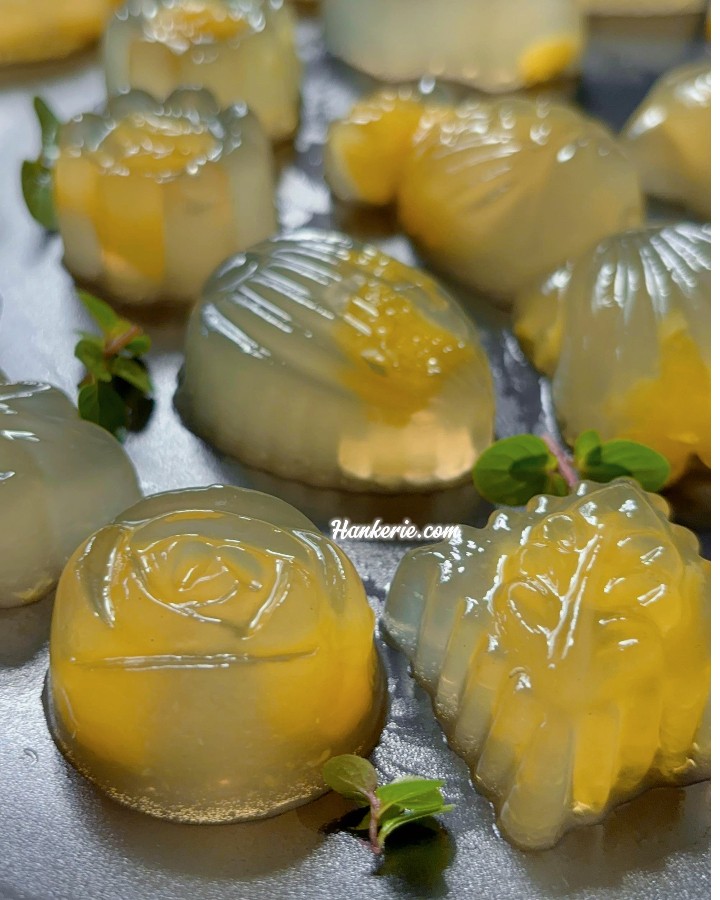
Final Thoughts
Cooking is a way to remember, reinvent, and reconnect. This mini orange konnyaku jelly is more than a dessert — it’s a memory you can hold, a flavour that carries you home.
If you’ve made this recipe, share your story. I’d love to see how your jellies turned out, what moulds you used, and who you shared them with.
Until then — keep cooking with heart.