From Kampung to Sydney
Growing up in a small kampung in Malaysia, the aroma of curry chicken wafting through our home signaled comfort, family, and tradition. My mother’s hands, stained yellow from turmeric, would expertly prepare the rempah (spice paste) that formed the heart of our meals.

Years later, in Sydney, I found myself yearning for that familiar warmth. With a backyard garden flourishing with lemongrass and local markets offering fresh produce, I embarked on a journey to recreate my family’s cherished curry chicken recipe. This blog post is a culmination of that journey—a blend of memories, flavors, and the joy of bringing a piece of home to a new land.
The rain was different in Sydney. It didn’t have the same tropical intensity as the downpours of my childhood in Malaysia, the kind that would drum a thunderous rhythm on the zinc roof of mum’s kitchen, often heralding the rich, complex aroma of her famous chicken curry. That scent, a heady perfume of spices, coconut, and something uniquely, was the scent of home, of comfort, of a love so profound it could be tasted.
For years after moving to Sydney, I chased that scent. I tried countless restaurants, bought pre-made pastes, and tinkered with online recipes. Some came close, offering a fleeting whisper of nostalgia, but none truly captured the soul of mum’s curry. It was more than just a dish; it was a legacy, a culinary heirloom passed down through whispered instructions, watchful eyes, and hands stained golden with turmeric.
Mum never wrote anything down. Her recipes lived in her fingertips, in the instinctive way she’d pinch a bit of this or add a handful of that. Learning from her was an exercise in observation, in patience, and in absorbing the unspoken language of her cooking. “You must taste, smell, and see,” she’d say, her eyes twinkling as she stirred the bubbling pot, the air thick with fragrant steam.
The breakthrough came not in a bustling Sydney market or a specialty store, but in my own small backyard. It was the sight of lemongrass, pushing its vibrant green spears out of the Australian soil, that sparked the determination to recreate family’s curry, not just as a dish, but as an experience, from scratch, just as she would have. This is that journey, and this is her recipe, adapted with the fresh bounty of my Sydney garden, for you to make your own.
This isn’t just about cooking; it’s about connecting with a heritage, about understanding the alchemy of spices, and about creating something truly special with your own hands. It will take time, patience, and a willingness to engage all your senses, just as mum taught. But the reward – a pot of authentic, soul-satisfying Malaysian chicken curry that tastes of tradition and love – is immeasurable. And who knows, perhaps the scent wafting from your kitchen will become your own family’s new “scent of home.”
The Heart of the Curry: Understanding the Rempah (Spice Paste)
Mum always said, “The curry is only as good as its heart, and the heart is the rempah.” The rempah, or spice paste, is the cornerstone of most Malaysian curries. It’s not just a mixture of ingredients; it’s a carefully balanced symphony of fresh aromatics, each playing its part to create a depth of flavour that a simple powder can never achieve.
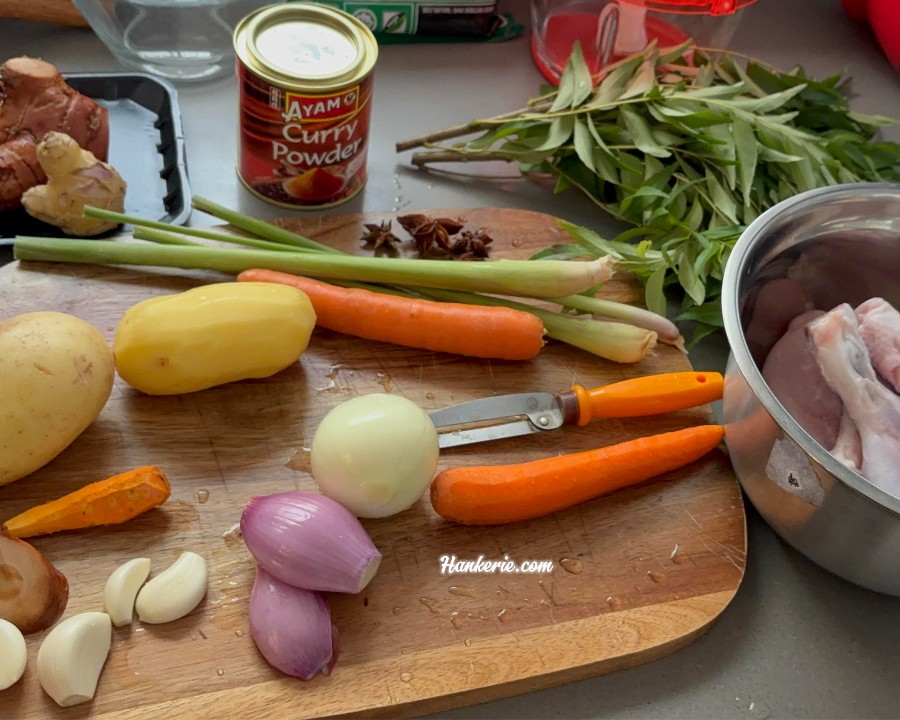
Our family’s rempah is built on a foundation of what I call the “golden trio” – turmeric, galangal, and ginger – brightened with lemongrass and given an allium kick by shallots and garlic.
- Turmeric (Kunyit): Fresh turmeric root is a revelation compared to its powdered form. Its vibrant orange flesh, earthy fragrance, and slightly bitter, peppery taste lend not only colour but also a distinctive warmth. Mum would scrub the roots clean, her fingers inevitably stained a sunny yellow for days. She believed turmeric was not just for flavour but for health, a “golden healer.” When buying fresh turmeric in Sydney, look for firm, unblemished roots. You can find it in most Asian grocers and some larger supermarkets. It stores well in the fridge for a few weeks or can be frozen.
- Galangal (Lengkuas): Often mistaken for ginger, galangal is its more assertive, perfumed cousin. It has a sharp, almost citrusy, pine-like aroma and a pungent, earthy flavour that is distinctly different from ginger. It’s tougher and more fibrous too. Mum would always use a heavy cleaver to chop it. In Sydney, fresh galangal is readily available in Asian markets. Look for firm, pale, and plump rhizomes. If you can’t find fresh, frozen is the next best option; dried galangal slices, rehydrated, can be used in a pinch but lack the vibrancy of fresh.
- Ginger (Halia): The familiar spice adds its own unique pungent warmth and sweetness. Mum preferred young ginger for its tenderness and milder spice, unlike the typical chinese cuisine where we prefer old ginger. When selecting ginger, look for smooth skin and a fresh, spicy aroma. It should feel heavy for its size.
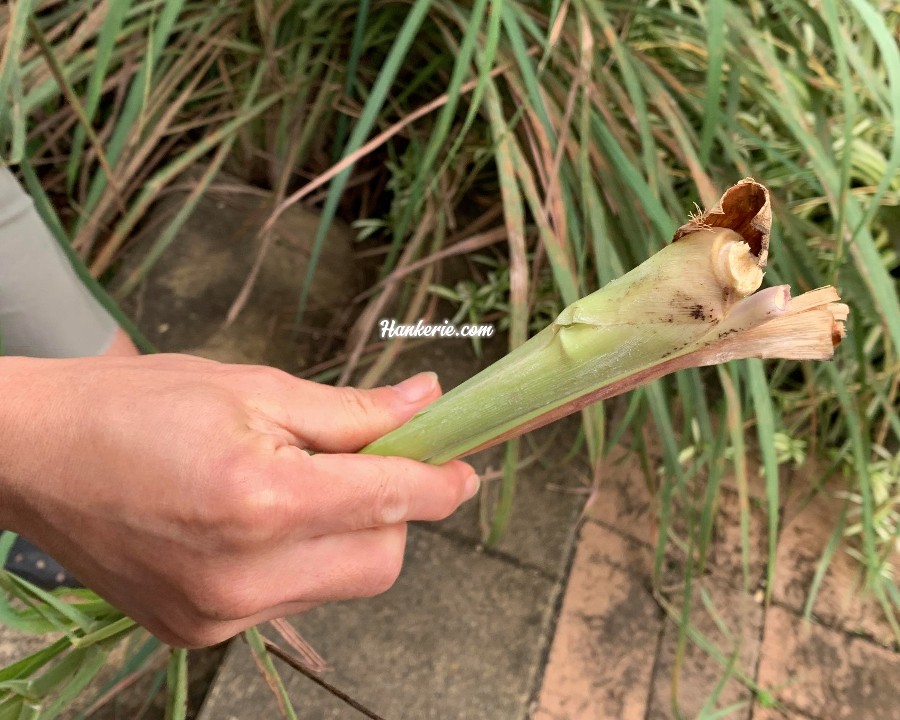
- Lemongrass (Serai): This is where my Sydney garden truly shines. The stalk of lemongrass for the rempah are crucial. We only use the white and pale green parts of the stalk – the lower, more tender section. This part is less fibrous and carries the most intense citrusy, floral fragrance. Mum would say, “The top parts are for bruising, for the pot to whisper its scent into the curry later. The bottom parts are for the heart, to be pounded into submission.” Growing lemongrass in Sydney is surprisingly easy. It loves sun and well-drained soil. A small clump can provide a steady supply. There’s nothing quite like stepping out to snip fresh stalks, their scent bursting forth as you cut them.
- Shallots (Bawang Merah): Sweeter and more delicately flavoured than large onions, shallots are essential for the rempah’s complexity. Mum preferred the small, reddish-purple Asian shallots. These can be found in any good Asian grocer in Sydney. If unavailable, you can use the larger, brown-skinned shallots, or as a last resort, a small red onion, though the flavour will be slightly different.
- Garlic (Bawang Putih): A universal aromatic, garlic adds its characteristic pungent depth. Mum wasn’t shy with her garlic.
Crafting the Rempah: A Labour of Love (and a Good Blender)
Traditionally, the rempah was pounded by hand in a lesung batu (stone mortar and pestle). Mum would spend what felt like hours rhythmically pounding, the percussive sound a familiar backdrop to my childhood mornings. She claimed the slow, deliberate crushing released the oils and flavours in a way no machine could. While I cherish that memory, I’ve embraced the modern convenience of a blender or food processor for this step, especially on busy Sydney weekdays. The key is to achieve a truly smooth paste.
Prepare the Spice Paste (Rempah)
- Mum’s Wisdom & Sydney Adaptation:
- Peeling Turmeric and Galangal: The skin on fresh turmeric and galangal can be quite tough. A spoon is surprisingly effective for scraping off turmeric skin. For galangal, a sharp paring knife is best.
- Slicing Lemongrass: Thinly slicing the lemongrass across the grain before blending is crucial, especially if your blender isn’t super powerful. This helps break down the fibres. My Sydney-grown lemongrass is often more tender than store-bought, making it a bit easier to process.
- The Order of Blending: Mum, even when showing me with a modern blender her granddaughter had gifted her, had a specific order. She’d start with the toughest ingredients. “Let the blades work on the hard heads first,” she’d chuckle. So, place the sliced galangal, turmeric, and lemongrass into the blender first. Give them a preliminary blitz. Then add the ginger, garlic, shallots, and the half brown onion.
- Water is Your Friend (Sometimes): Add the water sparingly, just enough to get the blades moving and create a vortex. Too much water will dilute the paste, and you’ll have to cook it down longer.
- The Goal: Smoothness. Blend, scrape down the sides, and blend again. You’re aiming for a paste that’s as fine and smooth as possible. Little fibrous bits of lemongrass or galangal are undesirable in the final curry. This might take a few minutes. Patience here pays off tenfold.
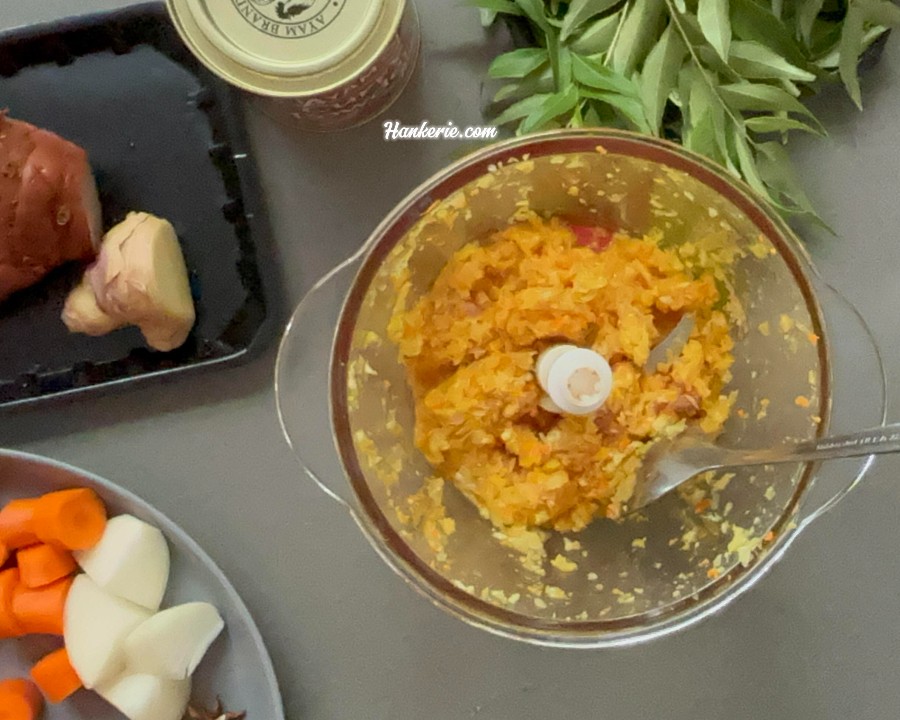
Set this vibrant, fragrant paste aside. The colour alone – a deep, sunny orange-yellow – is a promise of the deliciousness to come. Close your eyes and inhale. Can you smell it? The sharp citrus of lemongrass, the earthy depth of turmeric and galangal, the pungent warmth of ginger, garlic, and shallots. This is the soul of your curry beginning to awaken.
The Supporting Cast: Whole Spices, Aromatics, and the Curry Powder Paste
While the rempah is the heart, a good curry also needs a strong supporting cast of aromatics and spices to build layers of flavour.
Whole Spices & Aromatics: The First Fragrant Wave
These are the elements that greet the hot oil first, releasing their volatile oils and perfuming the entire kitchen.
- Remaining Green/Top Parts of Lemongrass: Remember those tougher, greener tops of the lemongrass stalks we set aside? Now is their time to shine. We don’t eat them, but they are bruised well to release their fragrance into the oil and the simmering curry. Bruising simply means gently crushing them with the back of a heavy knife or a pestle. You want to break the cell walls to let the aroma escape. My Sydney lemongrass, even the top parts, is wonderfully fragrant. I often tie them into a knot for easy removal later.
- Star Anise: Just one or two of these beautiful, star-shaped pods are enough. They impart a warm, sweet, slightly liquorice-like aroma and flavour that is characteristic of many Malaysian dishes.
- Large Brown Onion, Sliced Thinly: Half of this onion went into the rempah. The other half is sliced and sautéed to provide a sweet, caramelised base note.
- Curry Leaves: Ah, curry leaves! Their fragrance is unique – slightly pungent, nutty, and citrusy. A few stalks are essential. If you live in Sydney, finding fresh curry leaves is relatively easy in Indian or Asian grocers. Even better, try growing a curry leaf plant! They can be a bit temperamental in cooler Sydney winters but will thrive in a sunny, sheltered spot. There’s a particular joy in plucking fresh leaves, their scent clinging to your fingers. If you absolutely cannot find fresh, frozen is a distant second, and dried is a very last resort, as they lose much of their aroma.
The Curry Powder Paste: Adding Depth and the Signature “Curry” Flavour
While the fresh rempah provides brightness and complexity, a good quality Malaysian-style curry powder adds a familiar, rounded “curry” profile and depth. Mum was particular about her curry powders.
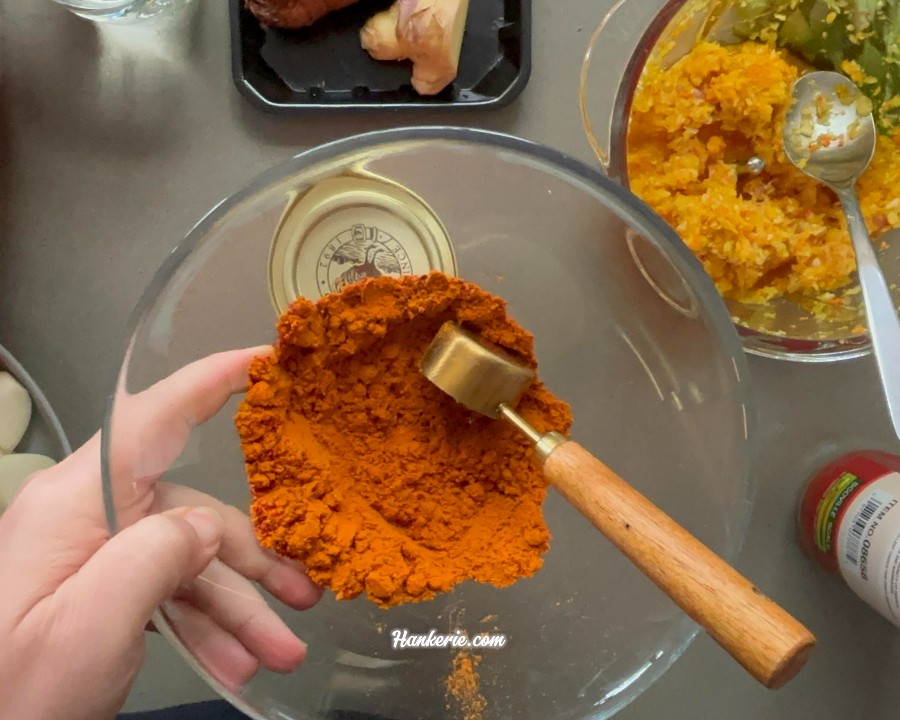
- Meat Curry Powder (Malaysian style, e.g., Baba’s): Malaysian meat curry powders are typically a blend of spices like coriander, cumin, chilli, turmeric, fennel, fenugreek, and more. Baba’s is a very popular brand in Malaysia and widely available in Asian stores in Sydney. It has a balanced flavour and a beautiful red hue.
- Malaysian Curry Powder (Meat/All Purpose): Using a second type of curry powder, as Mum did, adds another layer of complexity. Sometimes she’d use a meat curry powder for a slightly different nuance, even in her chicken curry. The idea is to build up the spice profile. If you can only find one type of good quality Malaysian meat curry powder, that’s okay, just use the total amount specified.
- Red Pepper Powder (Chilli Powder): This is purely for heat. Adjust it to your preference. Malaysian cuisine loves its spice, but Mum always said, “The chilli should dance with the other spices, not scream over them.” You can use Kashmiri or Korea chilli powder for a vibrant red colour with moderate heat, or a hotter variety if you prefer.
- Water to Form a Paste: Mixing the curry powders with a little water to form a thick paste before adding them to the pot is a crucial step. This prevents the powders from burning when they hit the hot oil and allows them to “bloom” and cook through properly, releasing their full flavour. It also helps them integrate more smoothly with the rempah.
Prepare Curry Powder Paste
- Mum’s Wisdom & Sydney Adaptation:
- Quality Matters: Use the best quality Malaysian curry powders you can find. The flavour difference is noticeable. In Sydney, explore suburbs like Campsie, Flemington, or Eastwood for well-stocked Asian grocers.
- The Consistency: You’re looking for a paste the consistency of thick ketchup or tomato paste. Too thin, and it will splatter; too thick, and it might be clumpy.
- Pre-Mixing: Mum would mix this in a small bowl and let it sit for a few minutes while she prepped other things. She said it let the powders “wake up.”
With your rempah blended, your aromatics ready, and your curry powder paste mixed, you are now prepared for the most magical part of the process: the tumis and pecah minyak.
The Alchemy of Flavour: Tumis and Pecah Minyak
This is where the true transformation happens. Tumis means to sauté or stir-fry, and pecah minyak literally translates to “oil splitting.” It’s the stage where the spice pastes are cooked in oil until the oil visibly separates from the paste. This is not just a cooking instruction; it’s a culinary rite of passage in Malaysian cooking. Achieving a good pecah minyak is the secret to a deeply flavourful, aromatic, and long-lasting curry. It requires patience. Rushing this stage is the most common mistake in curry making.
Before the Sauté: Potatoes and Carrots – The Earthy Companions
Our family curry always includes potatoes and carrots. The potatoes absorb the rich gravy beautifully, becoming creamy and flavourful, while the carrots add a touch of sweetness and colour.
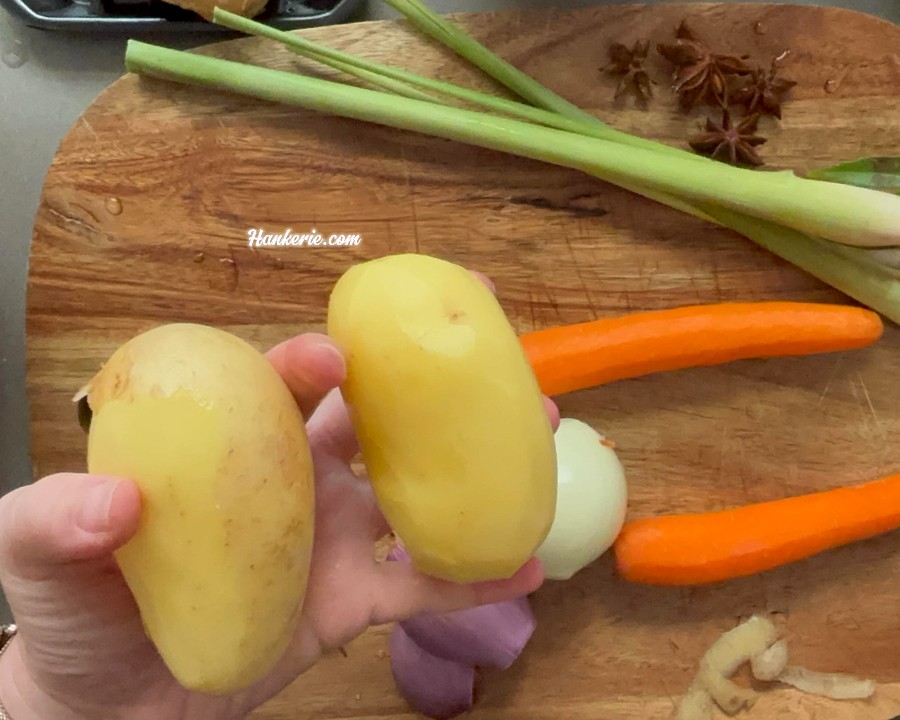
- Main Ingredients (Partial):
- 2 medium Potatoes, peeled and cut into large chunks (approx. 1.5-inch cubes)
- 2 mini Carrots, peeled and cut into thick rounds or chunks (or 1 large carrot)
Prep Other Ingredients & Shallow Fry Potatoes
- Prep Vegetables: Ensure potatoes and carrots are peeled and cut as described. Keep the potatoes submerged in water after cutting to prevent them from browning until you’re ready to use them.
- Slice Brown Onion: The remaining half of the brown onion should be sliced thinly.
- Bruise Lemongrass: Take the remaining green/top parts of the 2 lemongrass stalks and bruise them well with the back of a knife or pestle. Tie them into a knot if you like.
- Prepare Tamarind Juice (Air Asam Jawa):
- Ingredient: Small piece of tamarind pulp (about the size of a walnut) soaked in about 1/4 cup of warm water.
- Process: Massage the pulp in the water to release its tartness. Strain the mixture through a fine sieve, pressing down on the solids to extract as much liquid as possible. Discard the seeds and fibrous bits. You should have about 2 teaspoons of concentrated tamarind juice. Tamarind adds a crucial tangy counterpoint to the richness of the coconut milk and spices. You can buy tamarind pulp blocks or convenient ready-to-use tamarind paste in Asian grocers in Sydney. If using paste, dilute a teaspoon or so in a little warm water.
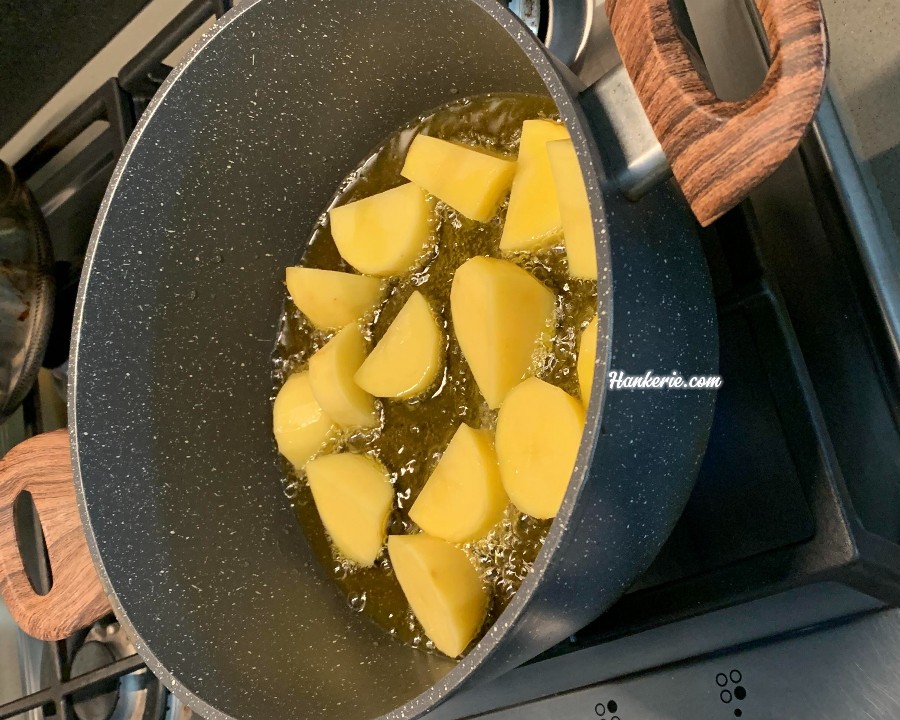
- Shallow Fry the Potatoes:
- In a kuali (wok) or a heavy-bottomed pot (the one you’ll use for the curry), heat about 1-2 cm of cooking oil over medium-high heat.
- Drain the potatoes well and pat them dry. Carefully add them to the hot oil.
- Shallow fry the potatoes until they are light golden brown on all sides and slightly tender but not fully cooked through (about 5-7 minutes). This step gives the potatoes a lovely texture and helps them hold their shape in the curry without becoming mushy.
- Remove the potatoes with a slotted spoon and set them aside on a plate lined with paper towels to drain excess oil.
The Sauté (Tumis) and the First Pecah Minyak: Cooking the Rempah
Now, using the same pot and some of the remaining oil (you might need to remove some if there’s too much from frying potatoes, or add a bit if needed – aim for about 3-4 tablespoons of oil), we begin the flavour building.
Recipe Step: Sauté Aromatics (Tumis)
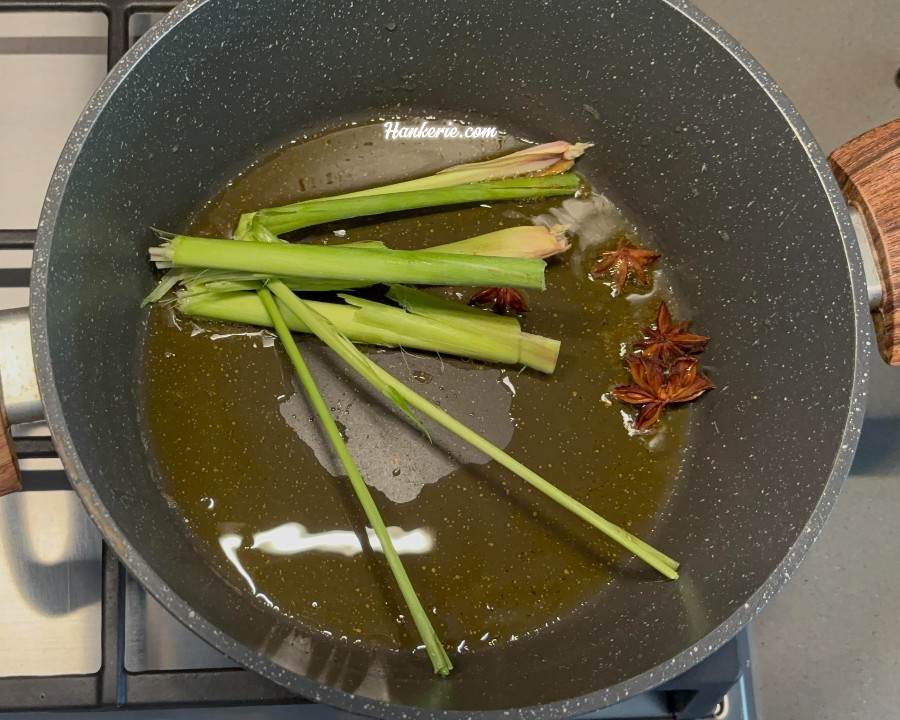
- Using the same pot, ensure you have about 3-4 tablespoons of oil heated over medium heat. (Remove any excess oil from frying potatoes, leaving just enough for sautéing. If you didn’t have much oil left, add fresh oil).
- Add the star anise, the bruised lemongrass stalks (knotted, if you did that), and the curry leaves.
- Stir and fry for about a minute, or until the curry leaves start to crisp up slightly and the air is filled with their incredible fragrance. Be careful not to burn them.
Cook the Spice Paste (Masak Rempah – Pecah Minyak Stage 1)
- Now, add the blended spice paste (rempah) you made earlier to the pot.
- Lower the heat slightly to medium-low. This is important to prevent the paste from burning before it’s properly cooked.
- Stir continuously. This is Mum’s golden rule for pecah minyak. Continuous stirring ensures even cooking, prevents sticking, and helps you observe the transformation.
- The Transformation: Initially, the paste will be bright and watery. As you cook and stir, the water will evaporate, the colour will deepen to a richer, darker hue, and the paste will become thicker and more concentrated. The aroma will intensify, becoming incredibly fragrant.
- Achieving Pecah Minyak: After about 8-10 minutes (sometimes longer, depending on the water content of your rempah and the heat), you will start to see the oil visibly separating from the solids of the paste. It will look like the oil is “breaking through” or “splitting” from the rempah, pooling around the edges and on the surface. This is pecah minyak. The paste itself will look somewhat grainy and darker.
- Mum would say, “You see? The oil is shy at first, then it peeks out. When it’s no longer shy and comes out to play, the rempah is happy.”
- Don’t rush this. It’s this slow cooking process that mellows the raw taste of the aromatics, toasts the spices, and creates that foundational depth of flavour. If you skimp on this, your curry will taste raw or “green.” Keep stirring, keep watching. If it looks like it’s sticking too much or browning too quickly, reduce the heat further. A little bit of caramelisation at the bottom of the pot is good (it adds flavour, called garing), but outright burning is bad.
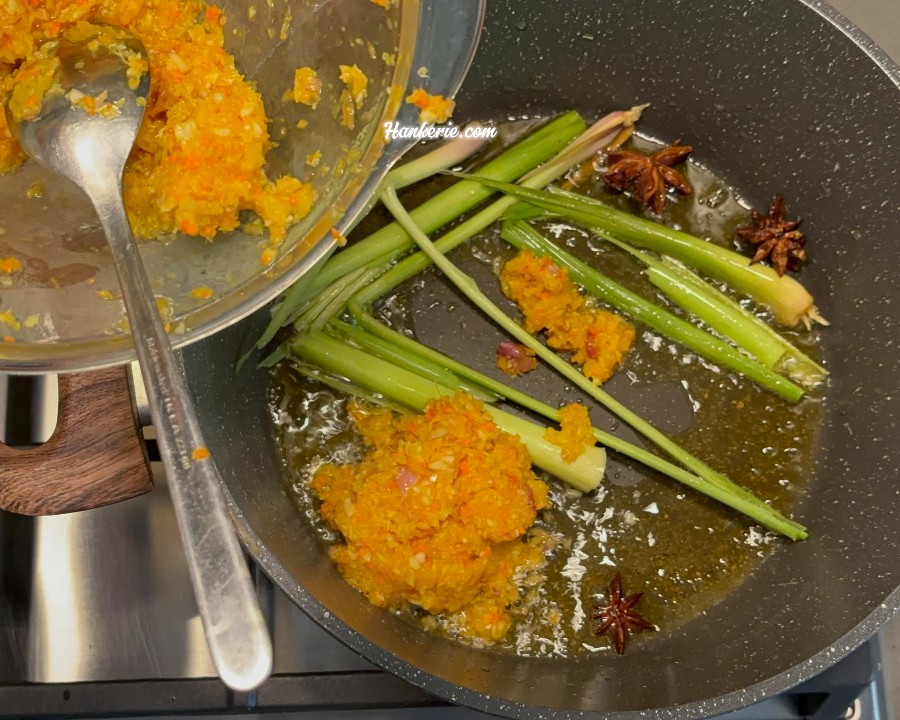
This first pecah minyak with the fresh rempah is a milestone. The kitchen should now be overwhelmingly fragrant, a complex bouquet that is uniquely Southeast Asian.
The Second Pecah Minyak: Cooking the Curry Powder Paste
Once the rempah has achieved pecah minyak, it’s time to introduce the curry powder paste.
Cook the Curry Powder Paste (Pecah Minyak Stage 2)
- Add the prepared curry powder paste (the mixture of curry powders, chilli powder, and water) to the pot with the cooked rempah.
- Continue stirring constantly over medium-low heat.
- The paste will initially be absorbed, and the mixture might look a bit sludgy. Keep stirring.
- Add in the chopped carrot to release the natural sweetness.
- Cook for another 3-5 minutes. You are looking for the same signs as before: the curry powder paste needs to cook through, losing its raw powdery taste and becoming fragrant. And yes, you’re aiming for a second pecah minyak. The oil will separate once more from this combined paste.
- Mum would explain, “Each spice needs its own conversation with the oil.” This second stage ensures the dried spices are also perfectly toasted and integrated.
- The mixture will become even darker and more intensely aromatic. The scent now is unmistakably that of a rich, complex curry base.
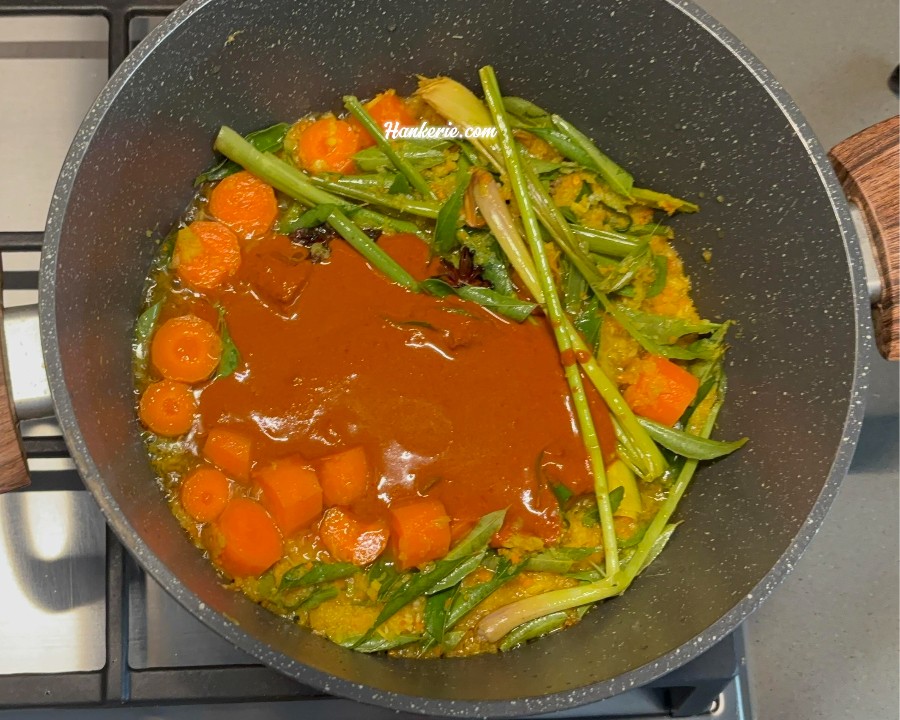
This double pecah minyak process is the secret to the incredible depth of flavour in Mum’s curry. It’s what separates a good curry from a truly great one. Your arm might be a little tired from all the stirring, but the reward is imminent.
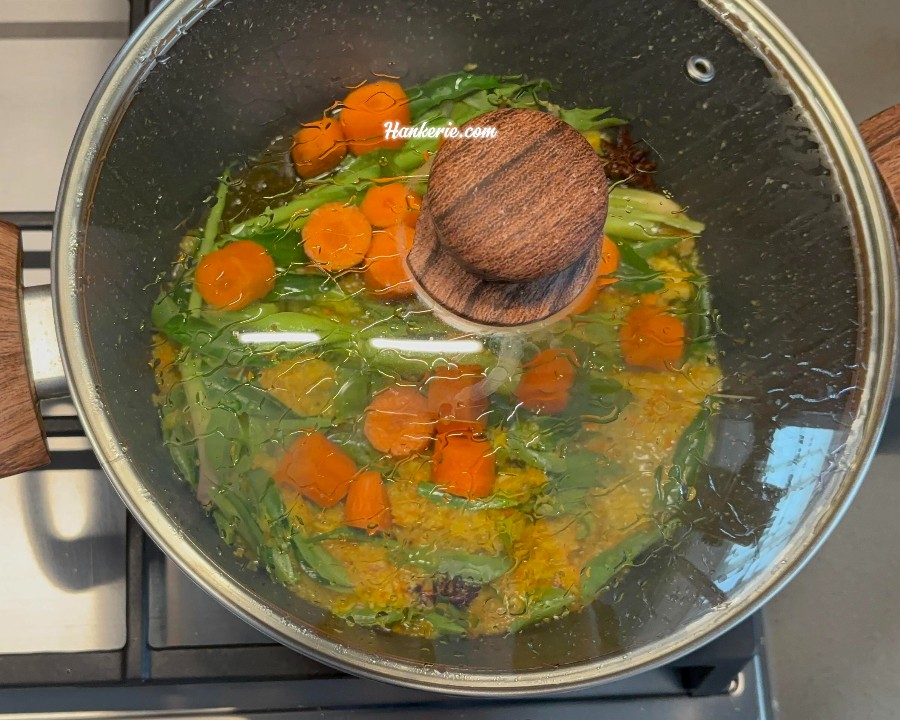
The Main Event: Chicken, Vegetables, and the Simmer
With the flavour base perfectly prepared, it’s time to introduce the star of the show – the chicken – and then let everything simmer together, allowing the flavours to meld and marry.
Main Ingredients (Continued):
- 5 Chicken Drumsticks (bone-in, skin on or off. The bones add depth to the gravy, and the skin keeps the meat moist.)
- The shallow-fried Potato chunks (set aside earlier)
- The sliced Brown Onion pieces (the ones you didn’t put in the rempah)
- 1-2 cups Thin Coconut Milk (Santan Cair) – more on this later
- 2 tsp Tamarind Juice (Air Asam Jawa – prepared earlier)
- 1/2 tsp Salt, to taste (or more, this is an initial seasoning)
Add Chicken
- Add the chicken drumsticks to the pot with the cooked spice paste.
- Increase the heat slightly to medium.
- Stir well to coat the chicken thoroughly with the fragrant paste. Make sure every piece is generously enveloped.
- Sear the chicken for about 3-5 minutes, turning the pieces occasionally, until the surface of the chicken is lightly browned and sealed. This helps to lock in the juices and adds another layer of flavour.
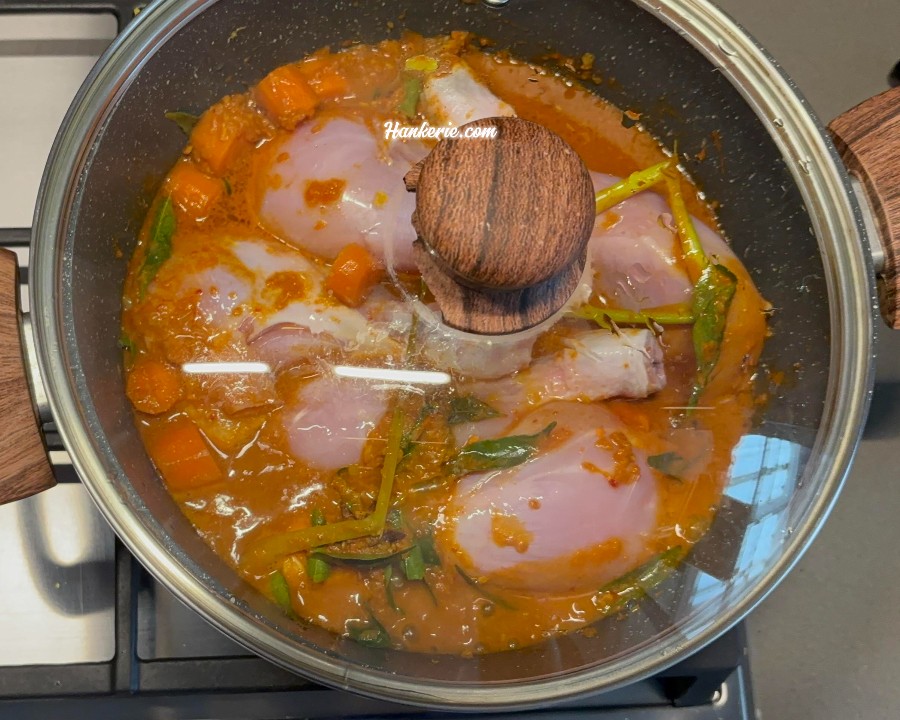
Seasoning (Initial)
- Stir in the prepared tamarind juice (2 tsp). This will add a subtle, crucial tang that cuts through the richness.
- Stir well. Mum would taste at this point, a tiny dab on the back of her hand. “Always taste, always adjust,” she’d murmur. The flavour balance should have a slight tang from the tamarind, an intense spiciness, and a deep savoriness.
Add Vegetables & Simmer
- Add the shallow-fried potato chunks you set aside earlier.
- Add the sliced brown onion pieces (the ones that weren’t part of the rempah). These will melt into the curry, adding sweetness and body.
- Stir everything together gently to combine.
- Now, it’s time to add liquid for simmering. Add 1 cup of thin coconut milk (Santan Cair).
- What is Thin Coconut Milk (Santan Cair)? Traditionally, coconut milk is made by grating fresh coconut, mixing it with water, and squeezing out the milk. The first squeeze, thick and rich, is santan pekat (thick coconut milk). Subsequent squeezes with more water yield santan cair (thin coconut milk).
- Sydney Adaptation: In Sydney, most of us use canned or cartoned coconut milk. For thin coconut milk, you can either buy a product labelled “coconut cooking cream” or “light coconut milk,” or you can dilute regular full-fat canned coconut milk. To do this, open a can of full-fat coconut milk. Scoop out the thick creamy part from the top (reserve this for later – this is your santan pekat). Mix the remaining thinner liquid in the can with a bit of water (say, half a can of water to the remaining liquid from one 400ml can) to get your thin coconut milk. For this stage, you want about 1 cup of this thinner liquid. If your canned coconut milk isn’t separated, just use about 1/3 of a can of full-fat coconut milk mixed with 2/3 cup of water. The idea is to have enough liquid for the chicken and vegetables to simmer and cook through without the curry becoming too thick too soon.
- Bring the mixture gently to a boil, then immediately reduce the heat to low.
- Cover the pot and let it simmer gently.
Cook Through
- Continue simmering for about 25-35 minutes, stirring occasionally (every 10 minutes or so, just to make sure nothing is sticking to the bottom).
- The chicken should be cooked through (no pinkness when pierced near the bone), and the potatoes and carrots should be tender when pierced easily with a fork.
- During this simmering time, your entire home will be filled with the most incredible, appetite-stimulating aroma.
- Managing Liquid: If the curry looks too dry at any point during simmering, add the remaining thin coconut milk (up to another cup, as needed). The consistency you’re looking for before adding the thick coconut milk is a rich, flavourful gravy, but not overly thick.
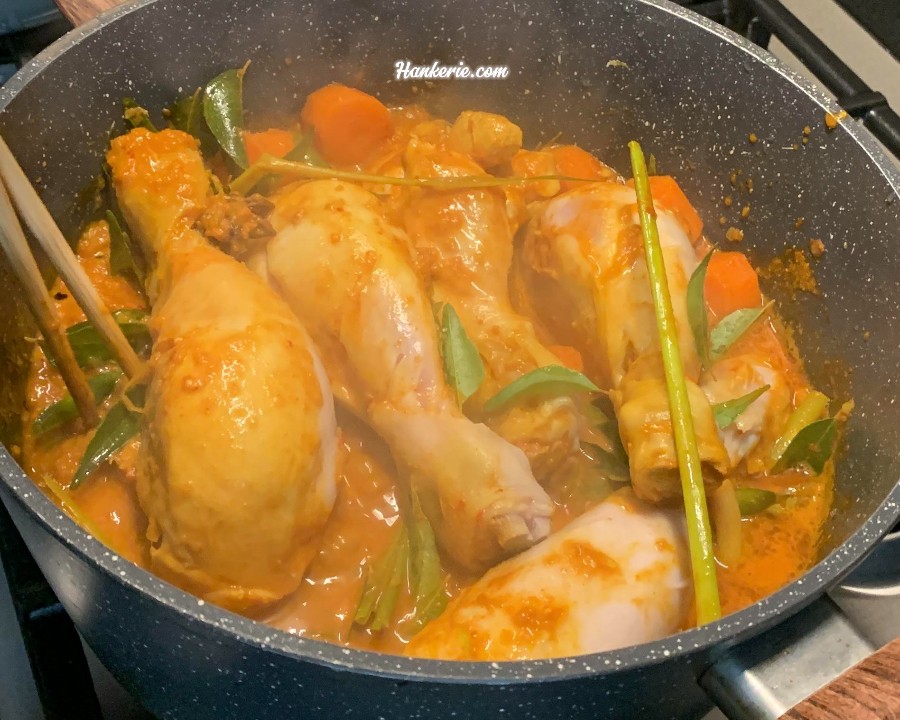
The Grand Finale: Thick Coconut Milk, Final Seasoning, and Rest
This is the final flourish, the step that gives Malaysian chicken curry its characteristic creamy richness.
Add Thick Coconut Milk (Santan Pekat)
- Once the chicken and vegetables are perfectly tender, it’s time for the santan pekat (thick coconut milk).
- Gently pour in about 1/2 to 1 cup of thick coconut milk. This is the rich, creamy part you might have reserved from the top of a can, or you can use full-fat coconut milk directly if you haven’t separated it. Mum would sometimes mix this thick coconut milk with a few tablespoons of water just to make it pour more easily, but the goal is richness.
- Stir very carefully and gently to combine.
- Heat the curry through gently for another 2-3 minutes.
- Do not let the curry boil vigorously after adding the thick coconut milk! A vigorous boil can cause the coconut milk to curdle or “break” (pecah santan), resulting in an oily, separated texture rather than a smooth, creamy one. Keep it at a bare simmer, just enough to heat it through.
Recipe Step: Season (Final Taste)
- Taste the curry again. Now is the time for final seasoning adjustments. Add salt as needed. Remember that curry flavours deepen and become more complex as they sit, so don’t oversalt. Mum usually added about 1/2 to 1 teaspoon of salt in total, but it depends on the saltiness of your curry powders and your personal preference. You can also add a tiny pinch of sugar if you feel it needs a little something to round out the flavours, though often the carrots and onions provide enough sweetness.
- The final taste should be a harmonious blend of spicy, savoury, slightly sweet, tangy, and deeply aromatic, all enveloped in a creamy, rich gravy.
Recipe Step: Rest & Serve
- Turn off the heat.
- Let the curry rest, covered, for at least 10-15 minutes before serving. Mum said it “lets the curry settle its thoughts and decide how delicious it wants to be.” This resting period allows the flavours to meld even more beautifully and the gravy to thicken slightly.
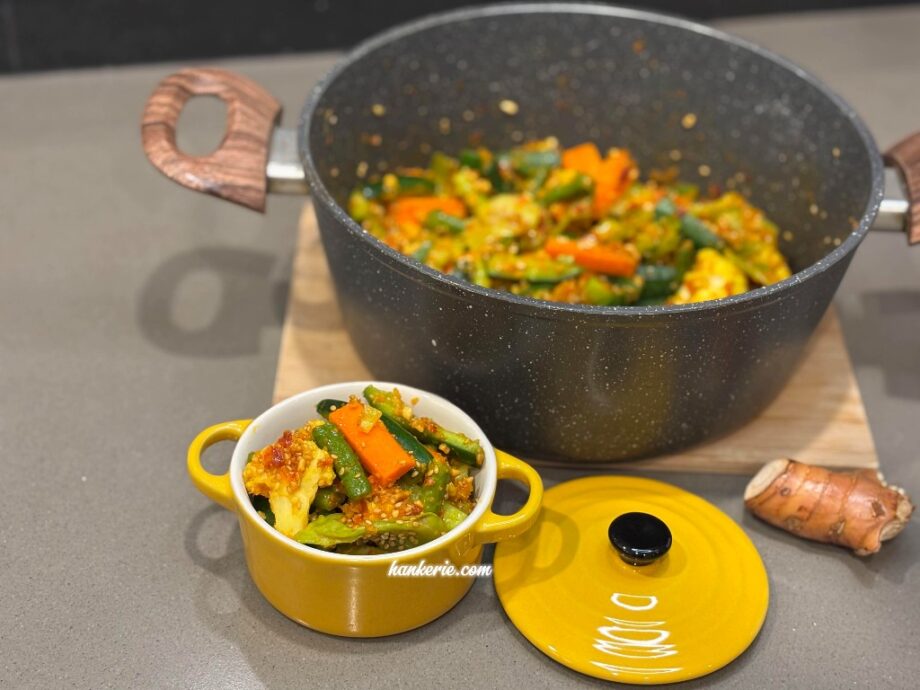
- Serving Suggestions: Malaysian chicken curry is traditionally served with steamed white rice. Roti canai (flaky flatbread), roti jala (lacy crepes), or even simple crusty bread are also excellent for soaking up that incredible gravy. A simple side of cucumber slices, perhaps lightly pickled (achar), can provide a refreshing contrast. Garnish with a sprig of fresh coriander or some crispy fried shallots if you like, though Mum’s was usually unadorned, its beauty in its rich colour and aroma.
Bringing Family Kitchen to Sydney: Tips for Authenticity Down Under
Recreating a beloved family recipe in a new country is a journey of adaptation and discovery. While Sydney is a multicultural city with excellent access to Asian ingredients, here are a few specific thoughts on bringing this Malaysian classic to life in your Australian kitchen, especially focusing on using fresh herbs from your garden.
- Sourcing Key Ingredients in Sydney:
- Fresh Aromatics (Turmeric, Galangal, Ginger, Shallots): Paddy’s Market Haymarket, local Asian grocers in suburbs like Cabramatta, Eastwood, Campsie, Marrickville, and Flemington are your best friends. Many larger Coles and Woolworths now stock fresh turmeric and ginger too.
- Lemongrass: Widely available. But as mentioned, growing your own is incredibly rewarding and easy in Sydney’s climate. A sunny spot, well-drained soil, and regular watering are all it needs. You can start from seedlings from a nursery or even try rooting store-bought stalks that have a good base.
- Curry Leaves: Many Indian and Sri Lankan grocers will have fresh curry leaves. Asian grocers stock them too. A curry leaf plant (Murraya koenigii) can be grown in a pot in Sydney. It needs sun and protection from frost. The flavour of fresh leaves is incomparable.
- Malaysian Curry Powders: Look for brands like Baba’s, Adabi, or Alagappa’s in Asian supermarkets. Don’t be tempted to use generic “curry powder” from Western supermarkets, as the flavour profile is quite different.
- Coconut Milk: Canned full-fat coconut milk is excellent. Ayam brand is popular and good quality. Look for ones with minimal additives.
- Tamarind: Tamarind pulp (sold in blocks) or tamarind paste (in jars) are available in Asian and Indian grocers. Pulp needs to be soaked and strained; paste is more convenient but check the concentration.
- Your Sydney Herb Garden Connection:
- Lemongrass: When harvesting lemongrass from your garden for the rempah, choose younger, plumper stalks for the tender white parts. The tougher, outer green layers and top sections are perfect for bruising and adding to the pot for aroma. The freshness from garden-to-pot is undeniable.
- Turmeric & Galangal: While more ambitious, both can be grown in Sydney in a warm, sheltered spot or large pots. They are rhizomes, so you plant a piece of the fresh root. They die down in winter and re-sprout in spring. Harvesting your own turmeric and galangal is the ultimate “scratch cooking” experience.
- Chillies: Many varieties of chillies grow well in Sydney gardens. You can grow your own to control the heat level of your curry, from mild to fiery. Fresh chillies can also be added to the rempah if you prefer their flavour over dried chilli powder.
- Coriander (Optional Garnish): While not in Mum’s core recipe for the cooking process, fresh coriander from the garden is a lovely garnish, adding a burst of freshness at the end.
- Adapting Techniques to a Sydney Kitchen:
- Blenders vs. Mortar and Pestle: While Mum’s arm strength with the lesung batu was legendary, a good quality blender or food processor is your best friend for the rempah. Take the time to get it smooth.
- Managing Heat (Stove Types): Whether you have a gas or electric stovetop, the key for pecah minyak is consistent, controllable low-to-medium-low heat. Get to know your stovetop’s quirks.
- Ventilation: Malaysian cooking, especially the tumis stage, can be very aromatic (and sometimes smoky if you’re not careful!). Good ventilation – an extractor fan, an open window – is essential. My Sydney kitchen fan works overtime when curry is on the menu!
Family Malaysian Chicken Curry from scratch : The Full Recipe
Here is the complete printable recipe, gathered in one place for your convenience, incorporating all the family secrets and techniques discussed.

How to Cook Malaysian Chicken Curry (Kari Ayam) from Scratch
Course: Lunch, DinnerCuisine: MalaysianDifficulty: Medium6
servings40
minutes40
minutes500
kcalAuthentic Malaysian Chicken Curry (Kari Ayam) recipe from scratch! Learn family secrets, master the ‘pecah minyak’ technique & find Sydney ingredient tips for the best homemade flavour.
Ingredients
- For the Spice Paste (Rempah)
4 cloves Garlic
2 Shallots, peeled
2 inches Ginger, peeled
1 inch Galangal (Lengkuas), peeled
1 inch Turmeric (Kunyit), peeled
White part only of 2 Lemongrass stalks (slice thinly before blending)
4-5 tbsp Water
- Whole Spices & Aromatics
Remaining green/top parts of the 2 Lemongrass stalks, bruised well
2 Star Anise
1 large Brown Onion, sliced thinly
Few stalks of Curry Leaves
- Curry Powder Paste
3 tbsp Meat Curry Powder (Malaysian style, e.g., Baba’s)
2 tbsp Malaysian Curry Powder (Meat/All Purpose – adds complexity)
1 tbsp Red Pepper Powder (adjust to your heat preference)
Water (approx. half cup water to form a thick paste)
- Main Ingredients
5 Chicken Drumsticks (bone-in, skin on or off)
2 medium Potatoes, peeled and cut into large chunks (approx. 1.5-inch cubes)
2 mini Carrots, peeled and cut into thick rounds or chunks
1-2 cups Thin Coconut Milk (Santan Cair)
2tsp Tamarind Juice (Air Asam Jawa – from pulp soaked in warm water & strained)
1/2 tsp Salt, to taste
Directions
- Prep Other Ingredients: Ensure potatoes and carrots are peeled and cut. Slice the brown onion. Bruise the remaining lemongrass stalks well with the back of a knife or pestle. Prepare tamarind juice.
- Prepare the Spice Paste (Rempah): Place the galangal, turmeric, and the sliced white parts of the lemongrass into a blender. Bliss it and add in ginger, garlic, shallots and half brown onion into the blender and blend it.Add 4-5 tbsp of water if needed to help it blend. Blend until you have a smooth, fine paste. Set aside.
- Prepare Curry Powder Paste: In a small bowl, combine the meat curry powder, Malaysian curry powder, and chilli powder. Add 1/2 cup water or just enough water to form a thick, smooth paste. Set aside.
- Shallow fry the potato. Heat up the cooking oil in the pot and shallow fry the potatoes until golden brown.
- Sauté Aromatics (Tumis): Using the same pot, remove half of the oil heat A. Add the star anise, bruised lemongrass stalks, and curry leaves. Stir and fry for another minute until highly aromatic. Include the carrot at this stage.
- Cook the Spice Paste (Masak Rempah – Pecah Minyak Stage 1): Add the blended spice paste (rempah) to the pot. Lower the heat slightly to medium-low. Stir continuously and cook the paste until it darkens slightly, becomes deeply fragrant, and you see the oil clearly separating from the paste solids (this is pecah minyak). This crucial step takes patience (around 8-10 minutes) and develops the core flavour. Don’t rush it, and don’t let it burn!
- Cook the Curry Powder Paste (Pecah Minyak Stage 2): Add the prepared curry powder paste to the pot. Continue stirring and cooking over medium-low heat until this paste is also fragrant, cooked through, and the oil separates once more (another 3-5 minutes).
- Add Chicken: Add the chicken drumsticks to the pot. Increase the heat slightly. Stir well to coat the chicken thoroughly with the cooked spice paste. Sear the chicken for about 3-5 minutes.
- Seasoning: Stir in the tamarind juice. Taste and check the flavour balance – it should have a slight tang.
- Add Vegetables & Simmer: Add the potato chunks and brown onion pieces. Stir everything together. Bring the mixture gently to a boil, then immediately reduce the heat to low. Cover the pot and let it simmer gently.
- Cook Through: Continue simmering for about 25-35 minutes, stirring occasionally, or until the chicken is cooked through and the potatoes and carrots are tender when pierced with a fork. If the curry looks too dry, add the remaining thin coconut milk.
- Add Thick Coconut Milk: Gently pour in the thick coconut milk and mix with some water. Stir carefully to combine. Heat the curry through gently for another 2-3 minutes. Important: Do not let the curry boil vigorously after adding the thick coconut milk, as it can curdle.
- Season: Taste the curry again and add salt as needed. Remember curry flavours deepen as they sit.
- Rest & Serve: Turn off the heat. Let the curry rest, covered, for at least 10-15 minutes before serving. This allows the flavours to meld beautifully.
Recipe Video
Notes
- Fresh
Rempahis Key: Use fresh galangal, turmeric, ginger, shallots, garlic, and the white part of lemongrass for the spice paste (rempah). Blend until very smooth for the best flavour base. Sourcing fresh in Sydney (Asian grocers/markets) is worth the effort. - Master ‘Pecah Minyak’: This is CRUCIAL. Patiently cook both the blended
rempahpaste AND the curry powder paste (separately) over medium-low heat until the oil visibly separates from the solids. Stir constantly, don’t rush, and don’t burn. This develops deep, authentic flavour. - Curry Powder Paste: Mix the Malaysian curry powders and chilli powder with water into a thick paste before adding to the pot. This prevents burning and helps cook the spices evenly. Use Malaysian-style powders (e.g., Baba’s) for the right flavour profile.
- Shallow-Fry Potatoes: Frying the potato chunks until golden brown first (as per the recipe) adds great texture and flavour before they finish cooking in the curry.
- Sauté Aromatics (
Tumis): Don’t skip frying the sliced onion, star anise, curry leaves, and bruised lemongrass stalks in oil before adding the pastes. This builds the initial aromatic layer. - Bone-In Chicken: Using bone-in chicken pieces like drumsticks significantly enhances the flavour of the curry gravy (
kuah). Sear the chicken well after the pastes are fully cooked. - Coconut Milk Technique: Simmer the curry primarily with thin coconut milk (
santan cair). Add the thick coconut milk (santan pekat) right at the end. Heat gently and do not allow it to boil vigorously, as it can curdle. - Balance Flavours: Tamarind juice adds essential tanginess to cut through the richness. Always taste and adjust salt at the end of cooking, as flavours concentrate during simmering and resting.
- Rest Before Serving: Letting the finished curry rest off the heat for 10-15 minutes allows the complex flavours to meld and deepen beautifully.
Serving Suggestions
Pair your Malaysian curry chicken with:
- Roti Jala: A traditional net-like crepe perfect for soaking up the rich curry sauce. Bon Appétit
- Steamed Jasmine Rice: The fragrant rice complements the bold flavors of the curry.
- Crusty Bread: Ideal for mopping up every last bit of the delicious gravy.
The Legacy in Every Bite
Cooking Mum’s chicken curry is more than just following steps. It’s a meditation, a connection to her, to our family, and to a vibrant culture. The patience required for the pecah minyak, the careful layering of flavours, the final creamy richness – it all speaks of a tradition of care and generosity.
When I finally achieved a curry that resonated with those childhood memories, made with lemongrass from my own Sydney soil, the joy was immense. It wasn’t just the taste, but the entire sensory journey: the fragrance filling my Australian home, the vibrant colour in the pot, the satisfaction of creating something so deeply personal and flavourful from scratch.
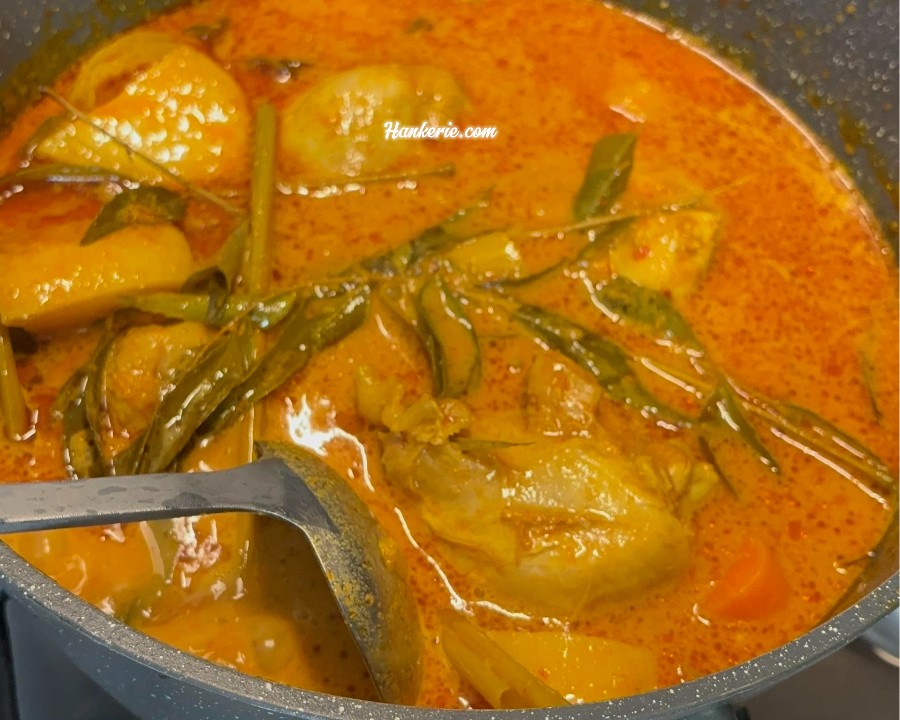
Each time I make this curry, I feel Mum’s presence beside me, her imagined nods of approval, her gentle reminders to “taste, always taste.” And when I share it with friends and family here in Sydney, I’m not just sharing a meal; I’m sharing a piece of my heritage, a story in every spoonful.
This recipe is now yours to make your own. Don’t be afraid to embark on this flavourful adventure. Take your time, engage your senses, and enjoy the process. Whether you’re in Malaysia, Sydney, or anywhere else in the world, the principles of good curry-making – fresh ingredients, patient cooking, and a lot of heart – remain the same. May the scent of this curry fill your home with warmth and joy, just as it has filled mine for a lifetime.
Other Malaysian Cuisine Recipes
What We Love:
🔥 Get more delicious cooking recipes episode in this Hometown Food Cooking Series! ➡️ https://youtube.com/playlist?list=PLe50YKtSlHF62Msd7Kn1MxoNtoZ5sVRSq&si=OU6yCzbGuMeYbygH
🔥 Ultimate Sambal Chillies Recipe to Take Your Noodle to New Heights ! ➡️ https://youtu.be/jI2r_ASlHtA
🔥 Char Kuey Teow ! ➡️ https://youtu.be/rSvmq4C2Q88
🔥 Nasi Lemak ! ➡️ https://youtu.be/sWOUalGufPw
I hope this recipe brings warmth to your kitchen and heart, just as it has to mine.