Introduction: Malaysia’s Kimchi with a Peranakan Soul
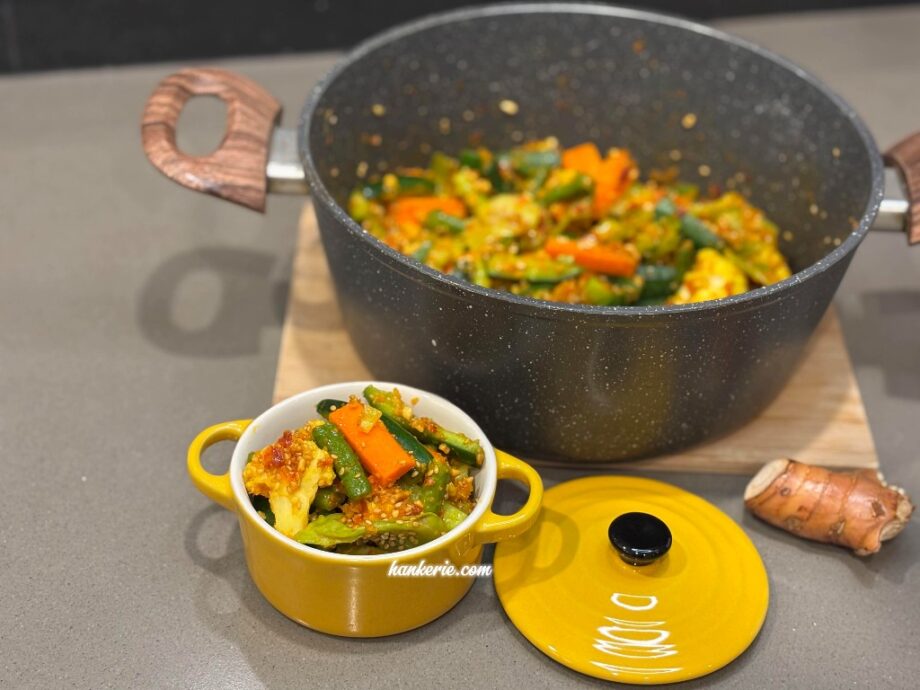
If Korea has kimchi, Malacca has Nyonya Acar Awak.
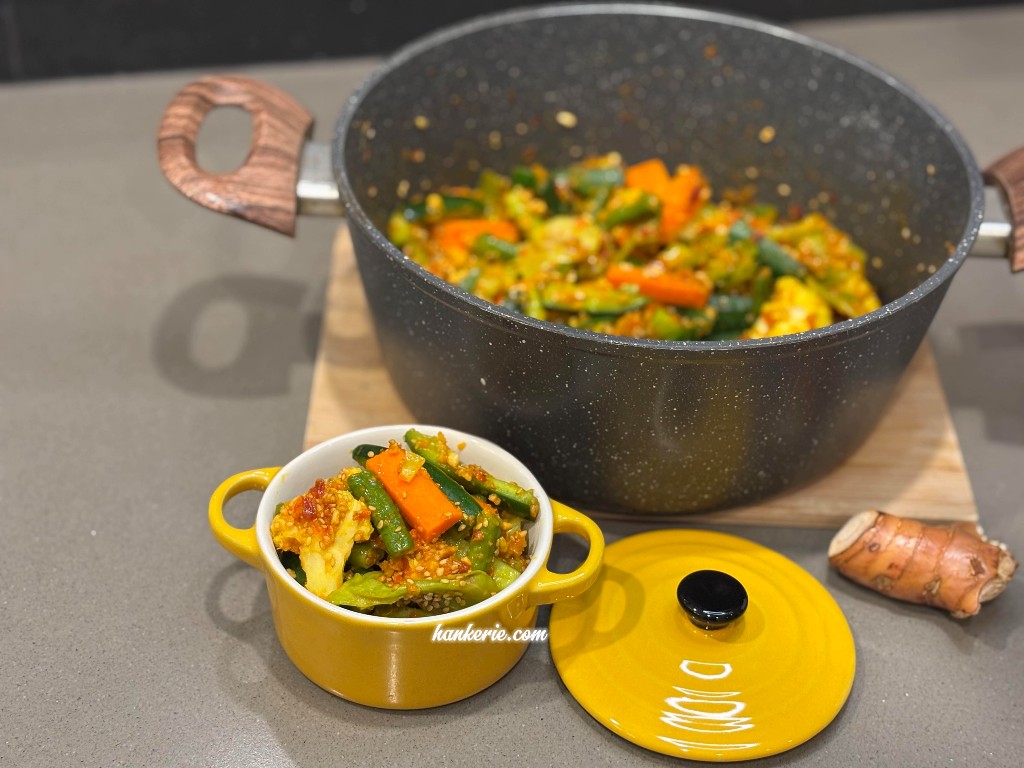
In the sun-drenched, historic streets of Malacca, where the air smells of sea salt and toasted shrimp paste, lies the origin of one of the world’s most complex condiments: Nyonya Acar Awak.
To the uninitiated, it looks like a simple vegetable pickle. To those who know Peranakan culture, it is a labor of love—a vibrant, crunch-inducing, “rempah”-laden masterpiece that defines the soul of Straits Chinese cuisine. If Korea has Kimchi, Malaysia has Acar Awak. While both celebrate the preservation of vegetables, Acar Awak brings a uniquely Southeast Asian profile to the table: the earthy warmth of fresh turmeric, the citrusy punch of lemongrass, and the addictive crunch of toasted peanuts.
In this exhaustive guide, we are going to dive deep into the secrets of making a professional-grade Acar Awak that stays crunchy for weeks and packs a flavor punch that will transform your dinner table.
Bold, vibrant, crunchy, sweet, sour, and gently fiery, Acar Awak is one of the most iconic preserved dishes from the Peranakan (Baba–Nyonya) kitchens of Malaysia. It is not just a side dish—it is memory, heritage, and technique preserved in a jar.
This recipe is a deep dive into how Acar Awak was traditionally made, why each step matters, and how you can confidently recreate it at home with modern tools while respecting its roots. This is not a rushed pickle. This is a carefully layered dish that rewards patience.
In this guide, I’ll walk you through:
- The cultural origin of Acar Awak in Malacca
- Why it’s often compared to kimchi
- How to prepare vegetables properly for long-lasting crunch
- The anatomy of a good rempah (spice paste)
- The science behind blanching, vinegar, and dehydration
- How to season for perfect balance
- Storage, serving ideas, and variations
Whether you grew up eating acar at family gatherings or are discovering it for the first time, this recipe will give you both confidence and understanding.
What Is Nyonya Acar Awak?
Acar Awak is a spiced vegetable pickle traditionally prepared by the Peranakan Chinese community, especially in Malacca. Unlike quick pickles soaked in vinegar, Acar Awak relies on a slow-cooked chilli rempah, toasted nuts, and carefully prepared vegetables.
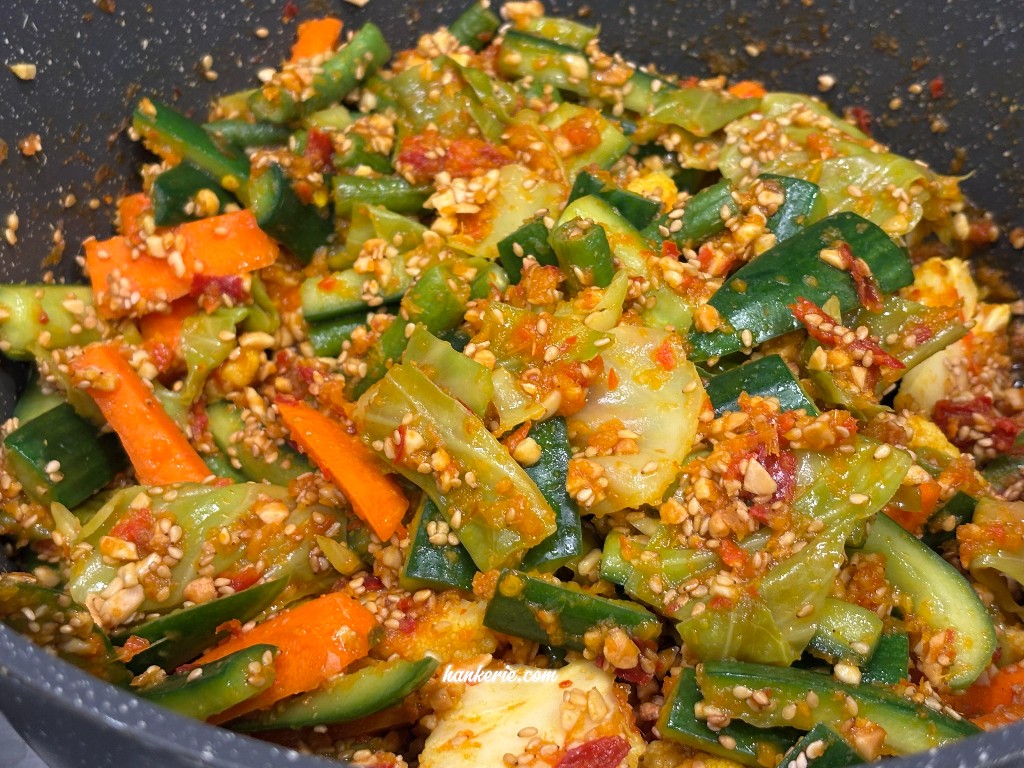
The word acar itself is believed to have roots in Indian and Malay culinary traditions, but the Nyonya version is unique:
- It uses a chilli-based spice paste instead of plain vinegar brine
- It balances sweet, sour, salty, and spicy flavours
- It incorporates peanuts and sesame seeds for texture
- It focuses heavily on vegetable preparation techniques
Like kimchi, Acar Awak:
- Is a preserved vegetable dish
- Improves in flavour over time
- Is served as a side to cut through rich foods
But unlike kimchi, Acar Awak is:
- Not fermented
- Less acidic
- More aromatic from spices like galangal, lemongrass, and turmeric
Why Acar Awak Was Traditionally Made for Festive Occasions
In old Nyonya households, Acar Awak was rarely made in small quantities. It was prepared for:
- Chinese New Year
- Weddings
- Ancestral worship ceremonies
- Large family gatherings
Why?
Because it is labour-intensive.
Each step—cutting, salting, blanching, drying, cooking rempah—requires time and care. The dish reflects the Nyonya belief that good food is worth waiting for.
Acar Awak Story
The story of Acar Awak is inseparable from the history of the Peranakan people. When Chinese migrants settled in the British Straits Settlements (Malacca, Penang, and Singapore), they married local Malays, creating a beautiful fusion of cultures. This “Nyonya” (women) and “Baba” (men) culture produced a cuisine that used Chinese ingredients (like soy and tofu) with Malay spices (like galangal, turmeric, and coconut).
“Awak” essentially means “yours” or “personal,” suggesting that every Nyonya household in Malacca once had their own secret version of this recipe. It was a staple at weddings and Chinese New Year feasts, acting as a refreshing “palate cleanser” for rich, fatty dishes like Babi Pongteh or Beef Rendang.
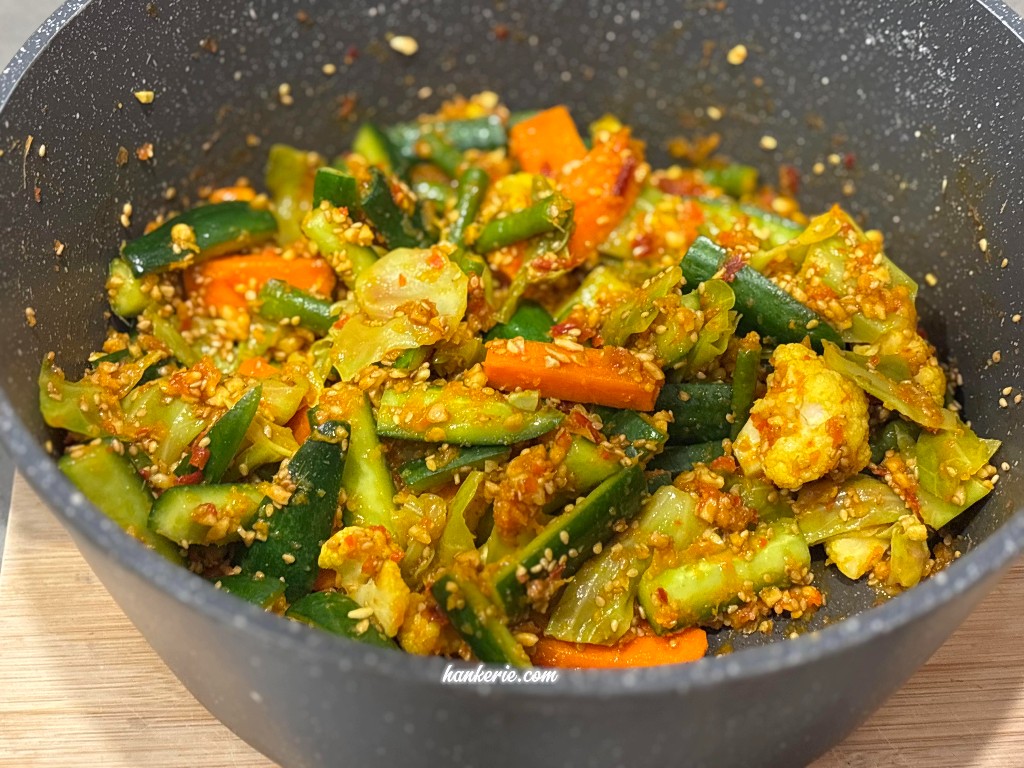
2. Acar vs. Kimchi: A Flavor Comparison
While Kimchi relies on lacto-fermentation over days or weeks, Acar Awak is a vinegar-based pickle combined with a cooked spice paste.
- Acidity: Kimchi is funky and sour from lactic acid; Acar is sharp and bright from white vinegar.
- Texture: Kimchi softens over time; Acar Awak is prized for its “snap” and “crunch.”
- Aromatics: Kimchi leans heavily on garlic, ginger, and fish sauce. Acar leans on the “Holy Trinity” of Nyonya cooking: Turmeric, Galangal, and Lemongrass.
3. The Science of the Crunch: Why Most Recipes Fail
Have you ever made Acar only for it to turn into a soggy, watery mess by day two? The culprit is osmosis. Vegetables are mostly water. When you put them in a spicy sauce, the salt and sugar in the sauce pull the water out of the veggies, diluting your sauce and softening the fibers.
Our Two-Step Solution:
- Salting: We use sea salt flakes to “sweat” the cucumbers and carrots. This pre-shrinks the cells.
- Dehydration: By placing blanched vegetables in a low-heat oven (50°C), we remove surface moisture. This creates a “thirsty” vegetable that absorbs the spice paste rather than leaking water into it.
4. The Ingredient Deep-Dive
The Vegetables
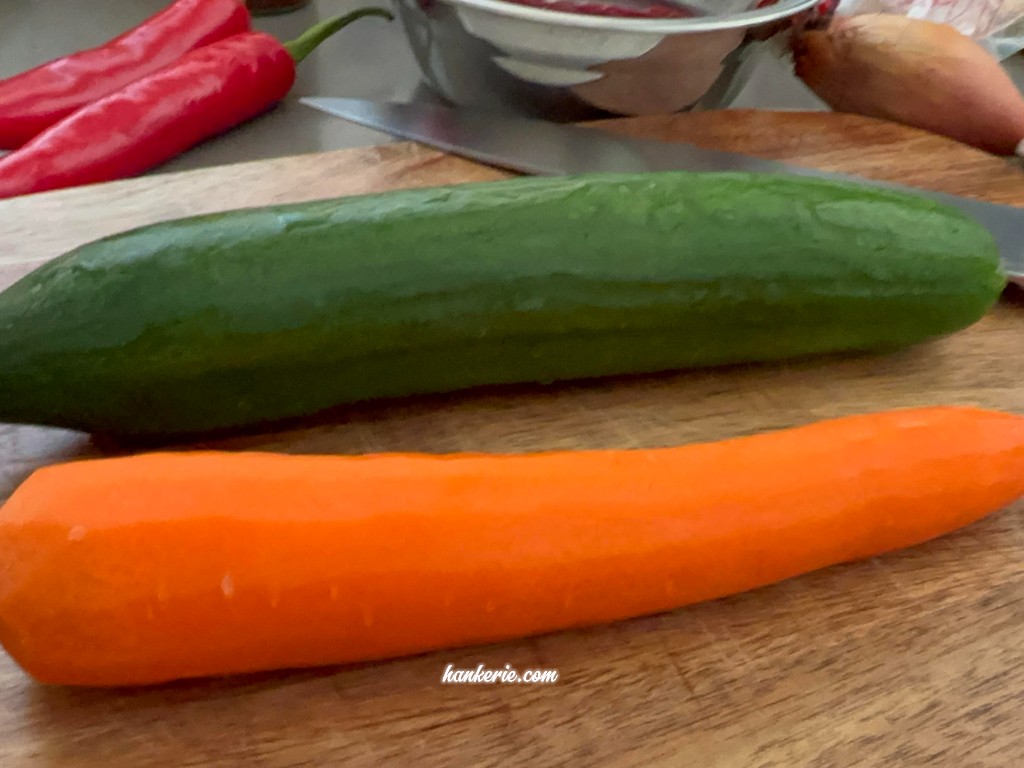
- Cucumber: Use English cucumbers or Japanese cucumbers. Mandatory: Remove the pith (seeds). The seeds are 95% water and will ruin your texture.
- Carrot: Provides sweetness and color.
- Long Beans: These add an earthy “green” snap.
- Cauliflower & Cabbage: These act like sponges for the sauce.
The Rempah (Spice Paste)
- Fresh Turmeric vs. Powder: Always use fresh. It provides a floral note that powder cannot replicate.
- Galangal (Lengkuas): Often called “Blue Ginger,” it tastes like pine and citrus. It is much harder than ginger—ensure your blender can handle it!
- Candlenuts (Optional Tip): If you want a creamier sauce, add 3 candlenuts to your paste.
5. The Master Recipe: Nyonya Acar Awak
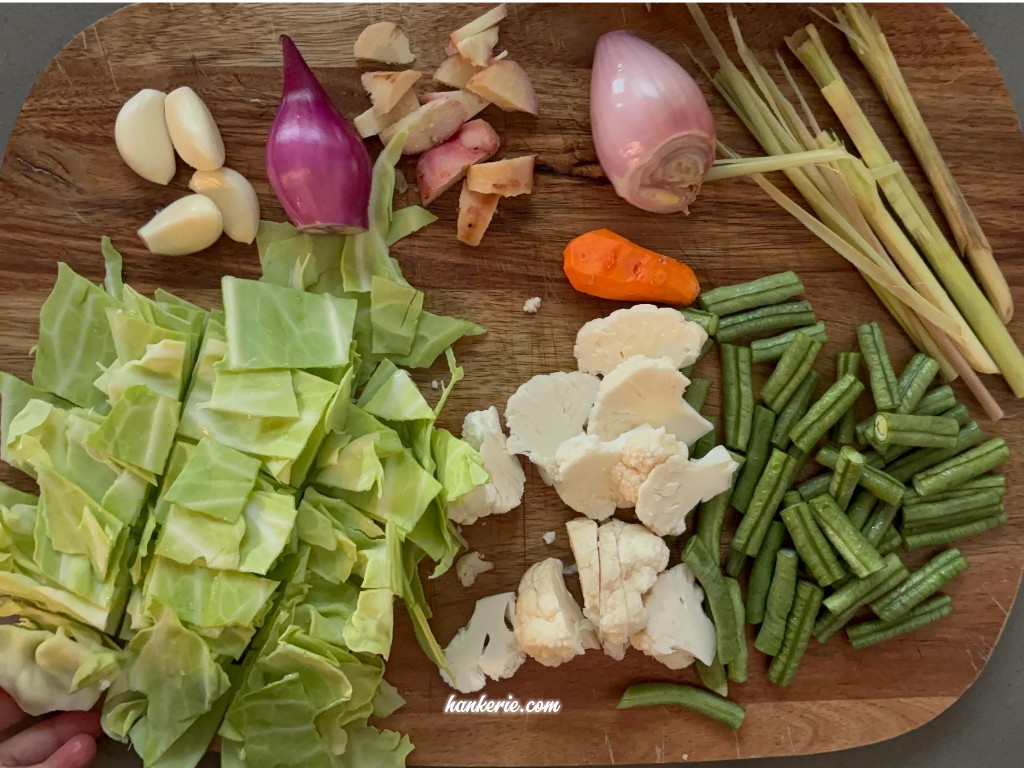
The Vegetables:
- 1 Large Carrot
- 1 Cucumber (seeds removed)
- 70g Long green beans
- 70g Cauliflower florets
- 70g Cabbage leaves
- 1.5 tsp Sea salt flakes
The Blanching Liquid:
- 600ml Water
- 2 TBSP White vinegar
The Spice Paste (Rempah):
- 1 Shallot & 1/2 Red onion (the mix adds depth)
- 4 Garlic cloves
- 2 Red chillies (deseeded for mild, keep seeds for heat)
- 4 Dried chillies (soaked in hot water until soft)
- 1 Lemongrass stalk (use only the tender white bottom part)
- 4cm Galangal (peeled and sliced)
- 3cm Fresh turmeric (peeled)
- Olive oil for sautéing
- 1/2 cup water (for blending)
The Seasoning:
- 1 tsp Tamarind paste (Asam Jawa)
- 1 tbsp Caster white sugar
- 1 tbsp Coconut sugar (Gula Melaka)
- 1 tsp Salt (to taste)
- 40g Peanuts (toasted and coarsely crushed)
- 1 tbsp Sesame seeds (toasted)
6. Step-by-Step Technique
Phase 1: The Prep
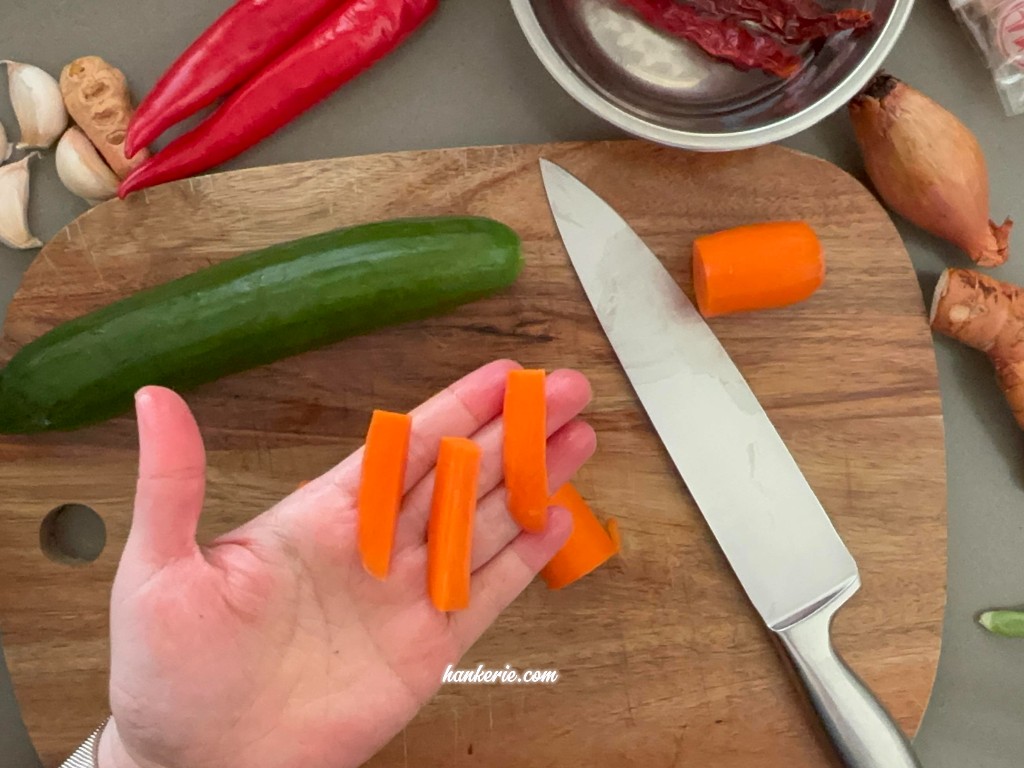
Cut all vegetables into uniform batons (roughly 3-4cm long). Consistency is key for even blanching.
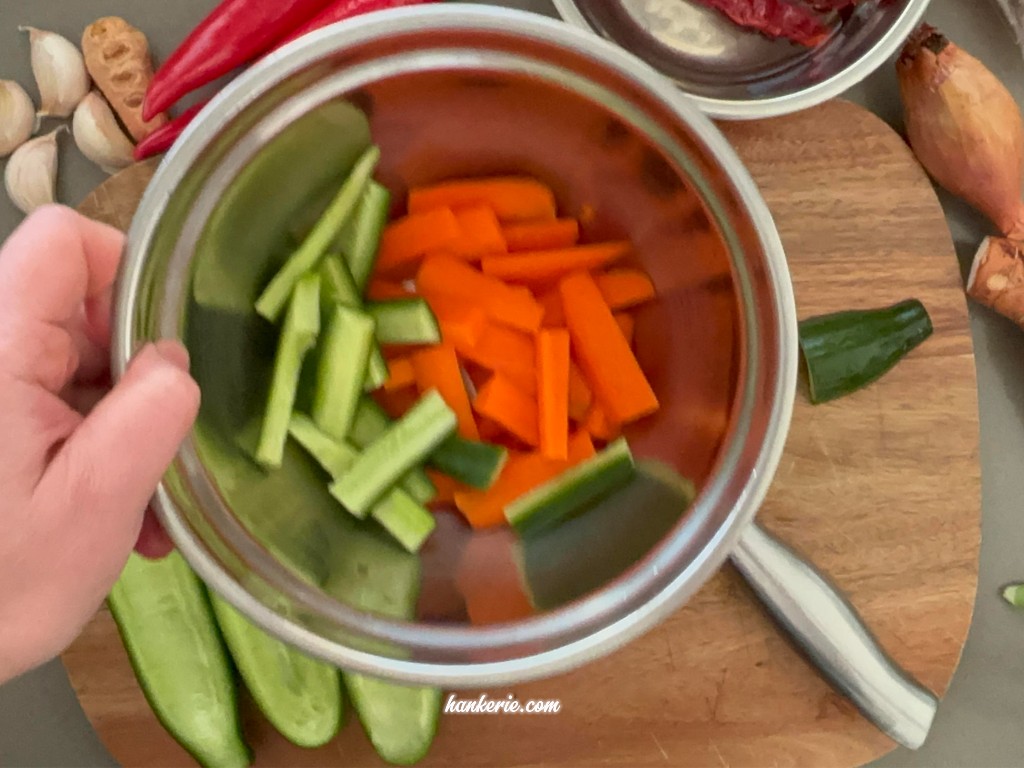
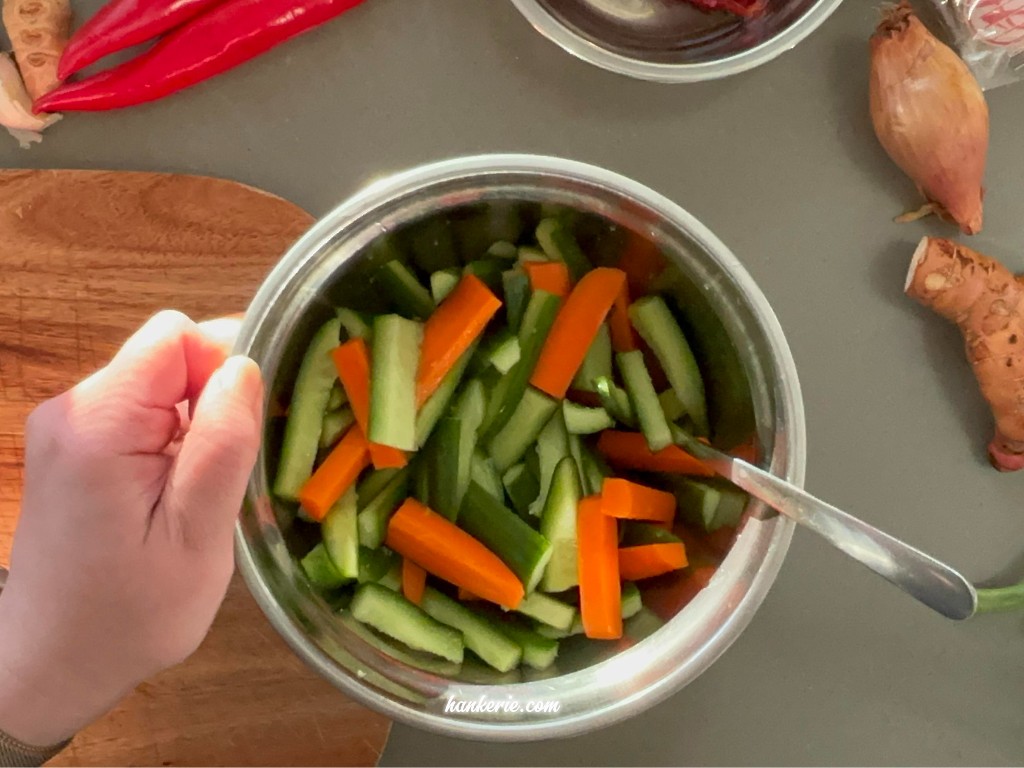
- The Salt Cure: Toss the carrots and cucumbers in sea salt. Let them sit in a colander in the fridge for 30 minutes. You’ll see a pool of water at the bottom—that’s the enemy leaving the building!
Phase 2: The Blanch & Dry
Boil the water and vinegar. The vinegar in the water helps “set” the colors of the vegetables so they stay vibrant.
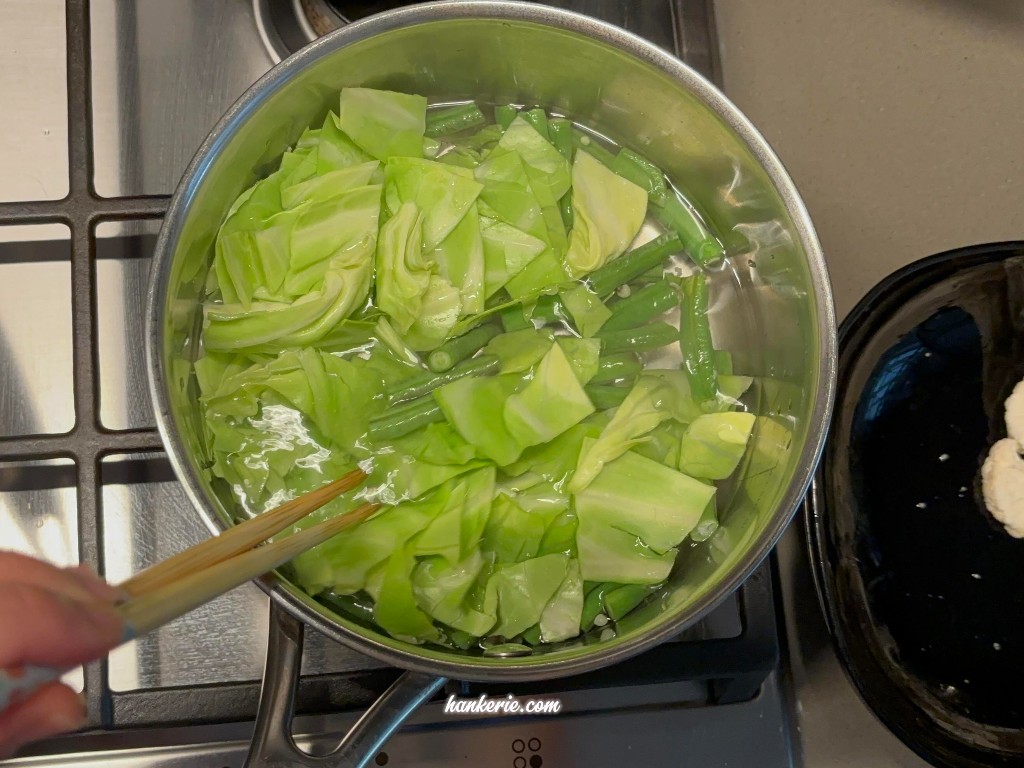
- Blanch for exactly 60 seconds.
- Shock in ice water (optional) or spread immediately on paper towels.
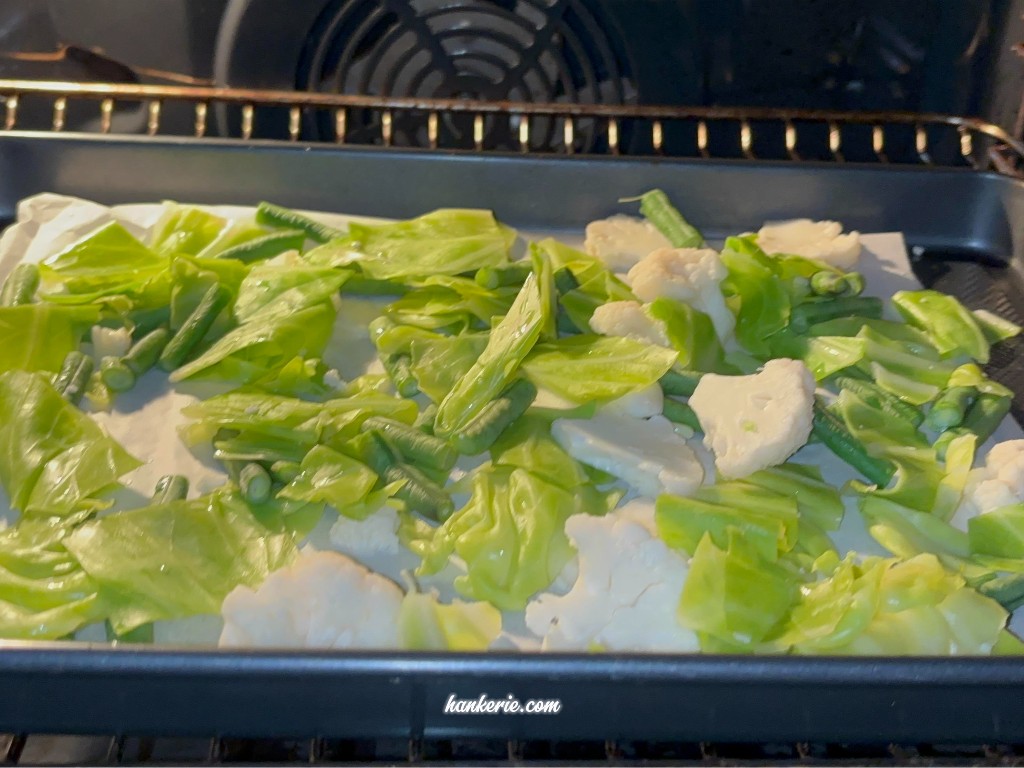
- The Oven Trick: Spread everything on a baking sheet. 50°C (122°F) for 40 minutes. They shouldn’t be “dried” like raisins, just “leathery” on the outside.
Phase 3: Sautéing to Perfection

The secret to Nyonya cooking is Patience.
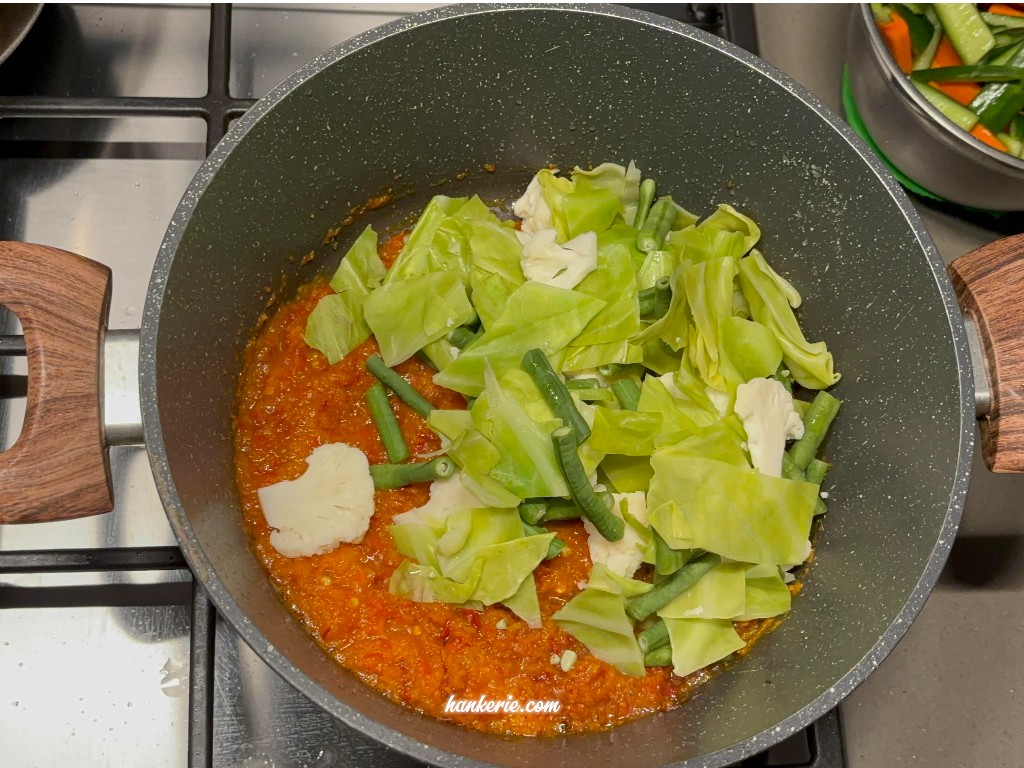
- Heat oil and add your blended paste.
- Cook on medium-low. You are looking for Pecah Minyak. This is when the water evaporates and the oil begins to bubble through the paste. The color will shift from a bright orange to a deep, moody red. This takes about 15-20 minutes.
Phase 4: Balancing the Flavors
Add the sugars and tamarind. Acar should be a “Three-Dimensional” flavor:
- Sweet from the sugars.
- Sour from the tamarind and the blanching vinegar.
- Salty from the salt cure.
7. Storage and Longevity
Store your Acar in a sterilized glass jar.
Freezing: DO NOT FREEZE. The ice crystals will destroy the vegetable cell walls, and you will end up with mush.
Room Temp: 1-2 days (if you live in a cool climate).
Fridge: Up to 1 month.
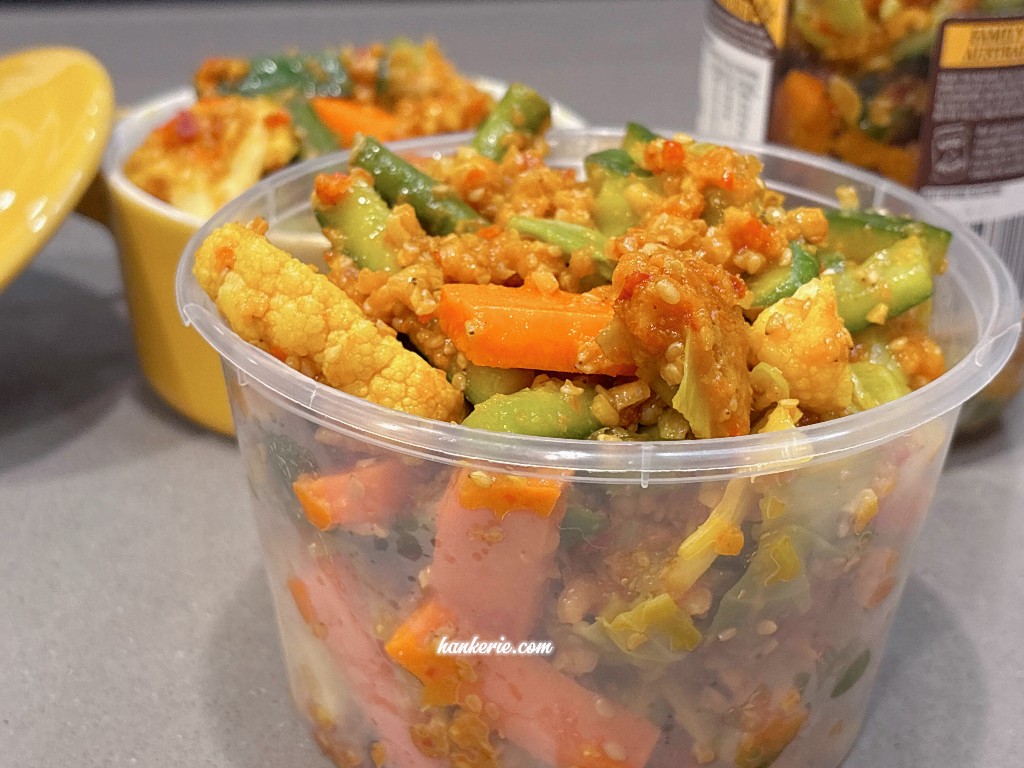
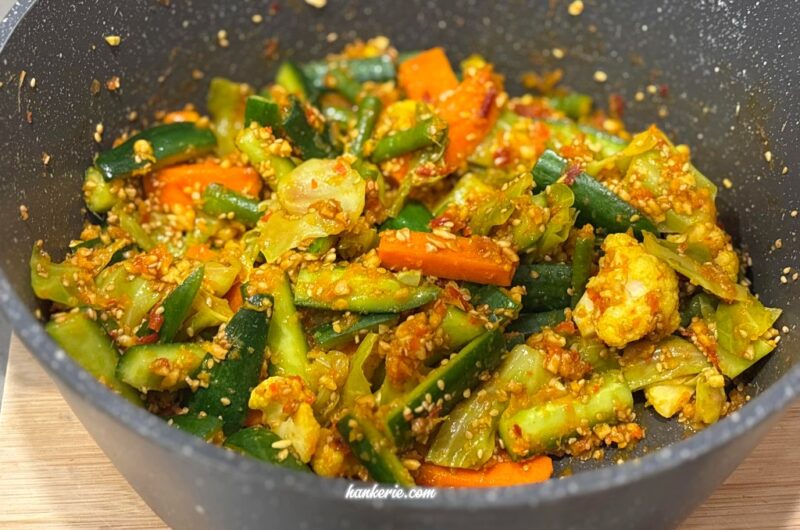
Nyonya Acar Awak from Malacca: A Heritage Peranakan Pickle, Reimagined at Home
Course: Lunch, DinnerCuisine: MalaysianDifficulty: easy4
servings30
minutes10
minutes100
kcalIngredients
- The Vegetables:
1 Carrot
1 Cucumber (seeds removed)
70g Long green beans
70g Cauliflower
70g Cabbage leaves
1.5 tsp Sea salt flakes (for drawing out moisture)
600ml Water + 2 TBSP White vinegar (for blanching)
- The Spice Paste (Rempah):
1 Shallot & 1/2 Red onion
4 Garlic cloves
2 Red chillies (deseeded)
4 Dried chillies (soaked in hot water)
1 Lemongrass stalk (white part only)
4cm Galangal
3cm Fresh turmeric
Handful Dried shrimp (washed)
Olive oil (for sautéing)
half cup water
- The Seasoning & Finish:
1 tsp Tamarind paste
1 tbsp Caster white sugar
1 tbsp Coconut sugar
1 tsp Salt (to taste)
40g Peanuts (toasted & crushed)
1 tbsp Sesame seeds (toasted)
Directions
- Prepare the Ingredients: Cut the carrot, cucumber, long beans, cauliflower, and cabbage into uniform bite-sized pieces. Mix the cucumber and carrot pieces with the 1.5 tsp of sea salt flakes. Store in the refrigerator for at least 30 minutes to draw out excess water.
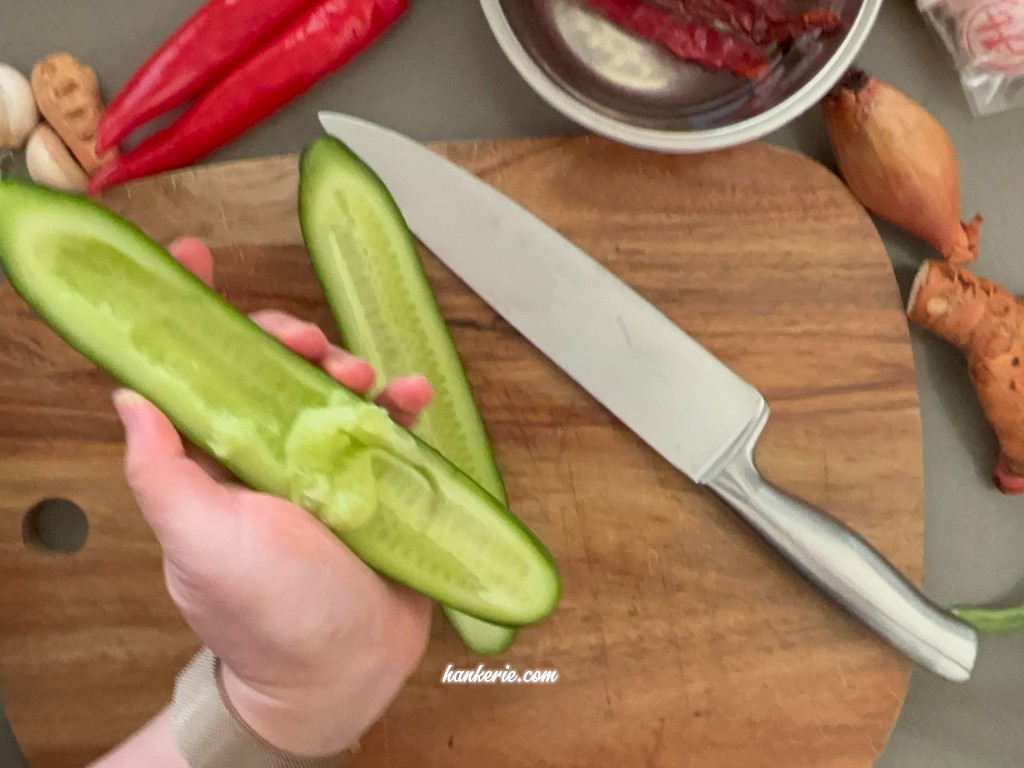
- Blanch & Dehydrate: Bring 600ml of water and 2 TBSP of vinegar to a boil. Blanch the cabbage, cauliflower, and beans for about 1 minute until slightly wilted but still crunchy. Drain and pat all vegetables (including the chilled carrots/cucumbers) very dry with paper towels. Preheat oven to 50°C. Spread vegetables on a tray and leave in the oven for 40 minutes to dehydrate. This ensures the acar stays crunchy and doesn’t become watery.
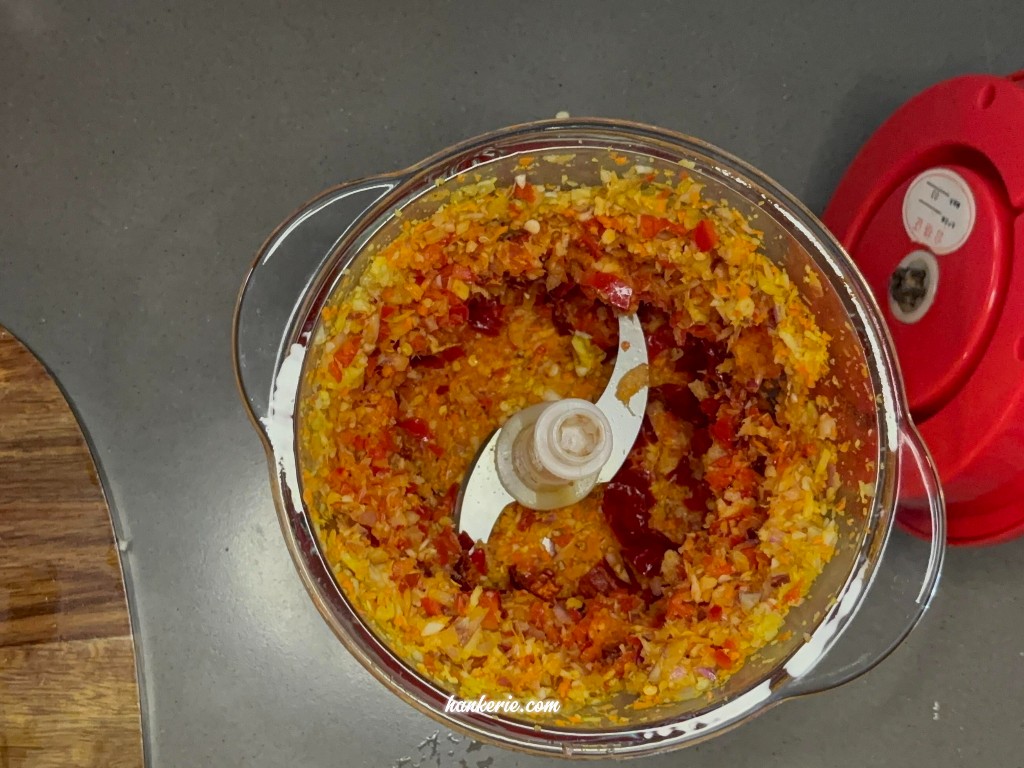
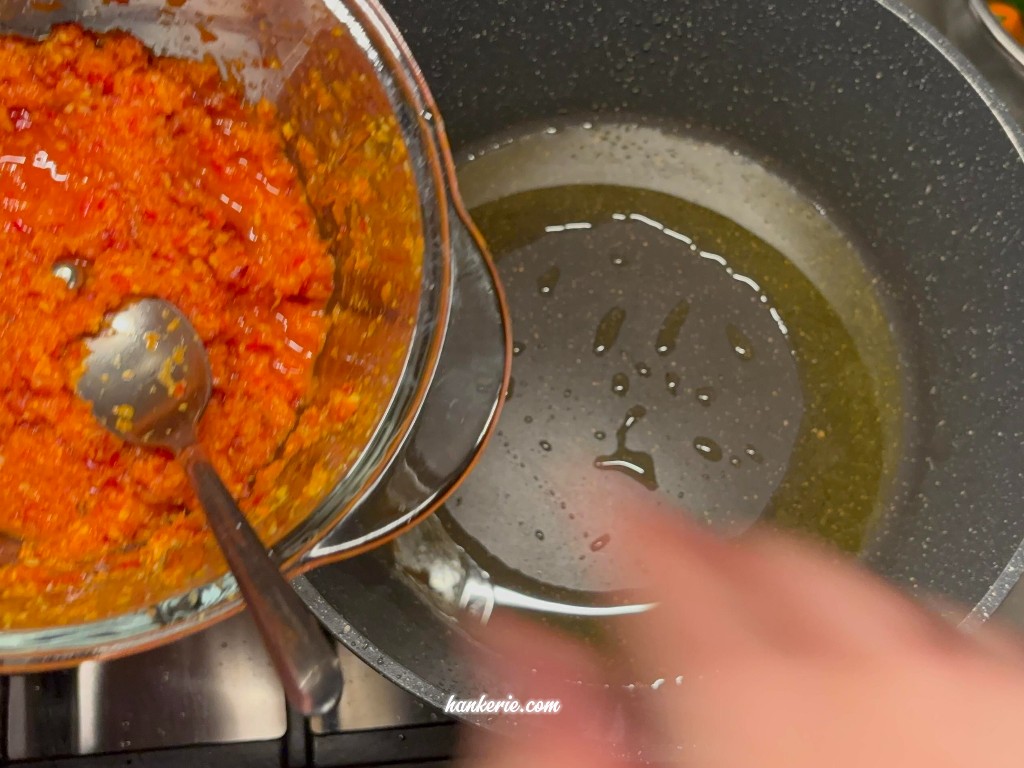
- The Rempah (Spice Paste): Blend the shallot, red onion, garlic, fresh and dried chillies, lemongrass, galangal, turmeric and dried shrimp into a smooth paste. Heat olive oil in a pan over medium heat. Add on half cup water into paste. Sauté the paste until fragrant and the oil begins to separate (pecah minyak), turning a darker shade of red.
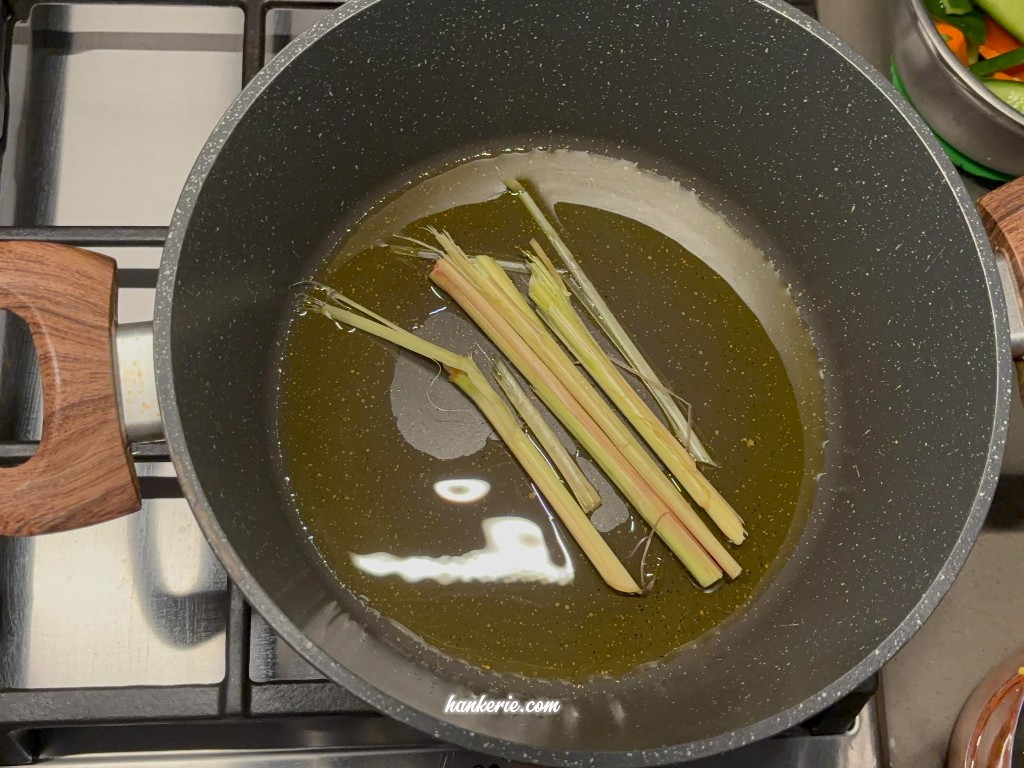
- Seasoning: Add the tamarind paste to the pan. Slowly pour in a little water if needed to reach a thick sauce consistency. Add the caster sugar, coconut sugar, and salt. Simmer on low heat until the sauce is thick and glossy. Taste and adjust—it should be a punchy balance of sweet, sour, and salty.
- Combine & Serve
- Remove the vegetables from the oven and toss them into the pan. Mix thoroughly until every piece is coated.
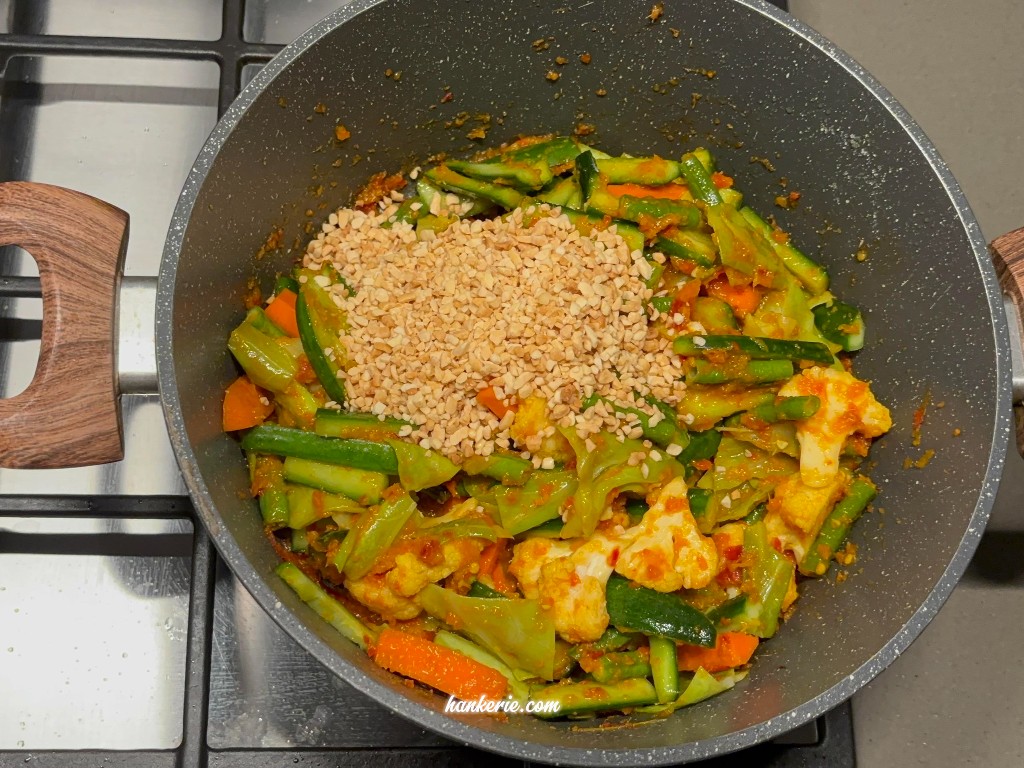
- Fold the crushed toasted peanuts into the chilli paste. Sprinkle with toasted sesame seeds.
- To Finish: Serve immediately or store in a clean glass jar.
Recipe Video
How to Serve Acar Awak
- With nasi minyak or nasi lemak
- Alongside curry chicken or rendang
- As a contrast to fried foods
- In sandwiches or wraps
Final Thoughts: Preserving Heritage, One Recipe at a Time
Acar Awak is not fast food. It is thoughtful food.
By understanding the why behind each step, you are not just following a recipe—you are continuing a culinary tradition that has been passed down for generations.
May this recipe bring colour, crunch, and heritage into your kitchen.
In my next post, I’ll be sharing a non-spicy, refreshing vegetable acar—perfect for everyday meals.