There are recipes that live in the heart long before they ever find their way into a kitchen notebook. For me, chilli oil — that fiery, fragrant, irresistible condiment — was one of those. Growing up in Malaysia, no table felt complete without a little jar of something spicy. Sometimes it was sambal belacan, pounding shrimp paste with chilli and lime until the air smelled sharp and alive. Sometimes it was a dollop of sambal tumis, slow-cooked until deep red and glossy. But on special days, there was something different: a jar of chilli oil, its scarlet hue glistening in the light, little flecks of garlic and shallot floating like jewels.
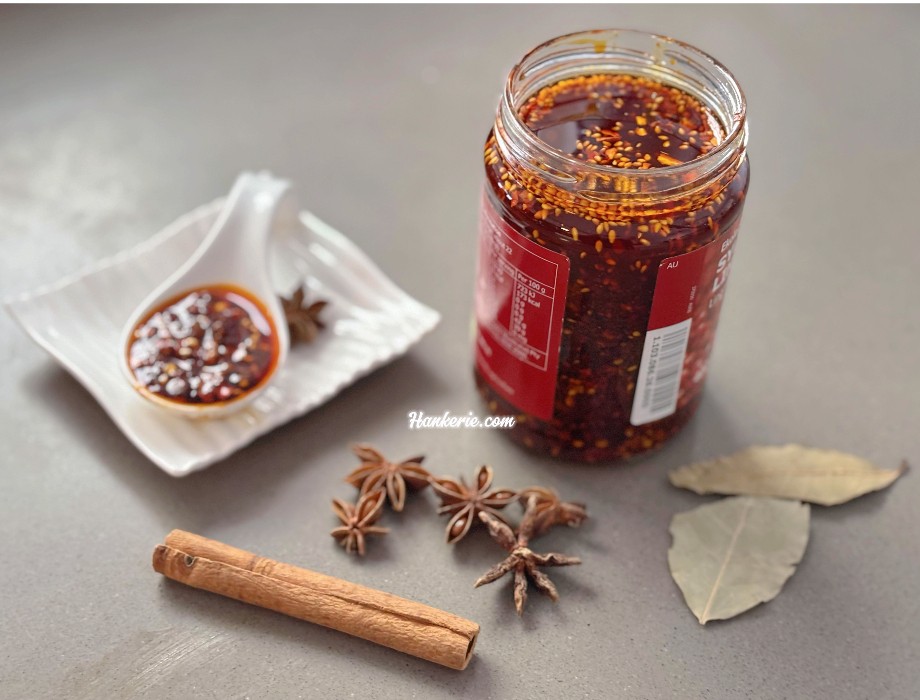
This wasn’t just about heat. It was about aroma. It was about crunch. It was about that magical balance between smoky chilli, nutty sesame, warm spices, and the soul-soothing perfume of garlic crisping in oil. To me, chilli oil represented possibility. A bowl of plain white rice could be transformed with just a spoonful. Silky soft tofu could turn into a luxurious dish. Wontons became little parcels of joy when they swam in it. And dumplings? Don’t even get me started — I could eat plates of dumplings just with chilli crisp oil and never tire of it.
When I moved abroad years later, away from the bustling Malaysian night markets and my mother’s spice-laden kitchen, I found myself missing this humble condiment more than almost anything else. Store-bought versions were easy to find, especially the famous Chinese brands, but none of them captured the very essence of what I remembered. They were missing the whisper of lemongrass, the earthy comfort of fennel, the gentle warmth of star anise and cinnamon — all the little Malaysian touches that made the chilli oil of my childhood so unforgettable.
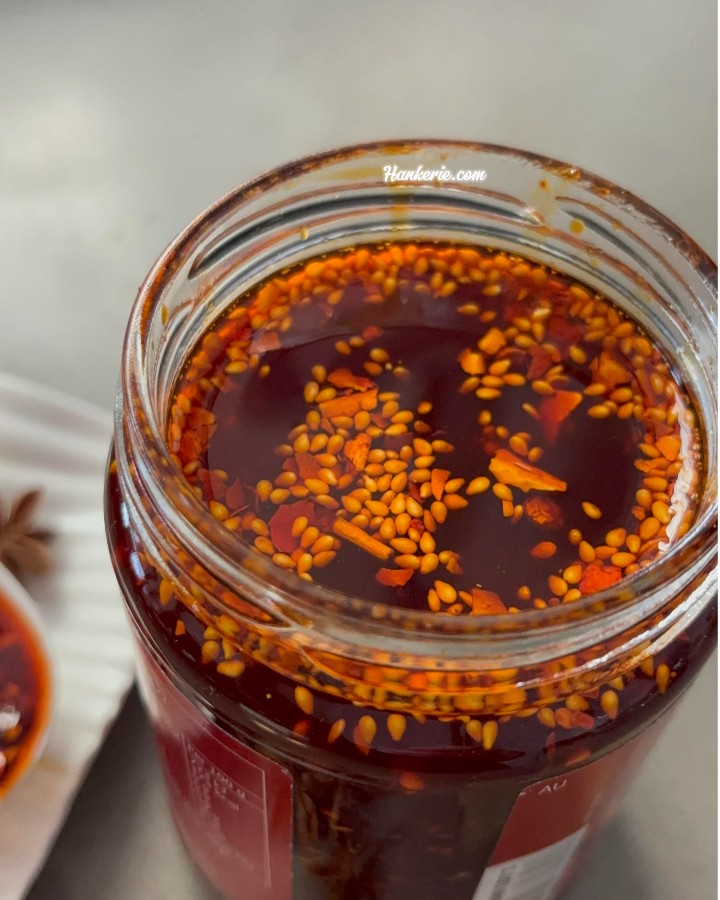
So, I did what any homesick cook does: I started making my own. And what began as a small experiment soon became an obsession. I tested different oils, different spice blends, and different techniques, chasing the exact memory of that sizzling moment when hot oil meets chilli flakes. Along the way, I discovered that making chilli crisp oil isn’t just about flavour — it’s about patience, intuition, and allowing the ingredients to tell their story.
Today, I want to share that story with you. Not just the recipe — though you’ll get every detail you need to make this at home — but the journey behind it. Because chilli oil isn’t just a condiment; it’s a memory, a legacy, and a little jar of comfort that you’ll find yourself reaching for again and again.
So grab your dried chilli flakes, raid your spice drawer, and let’s make something magical.
If you think about it, chilli is a migrant spice. It didn’t originally belong to Malaysia. Chilli peppers were brought from the Americas in the 16th century, spreading like wildfire across Asia. But once they arrived, it was as if they had always been meant for our kitchens. Malaysians embraced chilli with open arms, weaving it into sambals, laksa pastes, curry powders, and countless home recipes. The heat resonated with us — we are, after all, a people who like our food bold and unapologetically flavourful.
But what makes Malaysian chilli preparations unique is the company they keep. Unlike in some cuisines where chilli stands almost alone, in Malaysia it is nearly always paired with a chorus of spices and aromatics. Fennel, with its sweet anise-like fragrance. Coriander, earthy and citrusy. Star anise, cinnamon, and cloves, borrowed from our rich spice trade history, reminding us of traders’ ships that once docked in Malacca centuries ago. Lemongrass, swaying in every backyard garden, cutting through richness with its citrusy lift. Garlic and shallots, always at the heart of our cooking, frying gently in oil until their perfume is irresistible.
This is the backdrop against which my chilli crisp oil recipe takes shape. It’s not just a condiment — it’s Malaysia in a jar. Every ingredient tells a piece of our story.
Take star anise, for example. I remember being a child in Johor, watching my grandmother make herbal braised chicken. She would drop a whole star anise pod into the pot, and I’d marvel at its shape — like a little brown starfish that had somehow wandered into our spice rack. She told me, “Just one is enough, more and it will take over.” She was right. That gentle liquorice note would bloom in the broth, adding a complexity that no one spice could achieve alone.
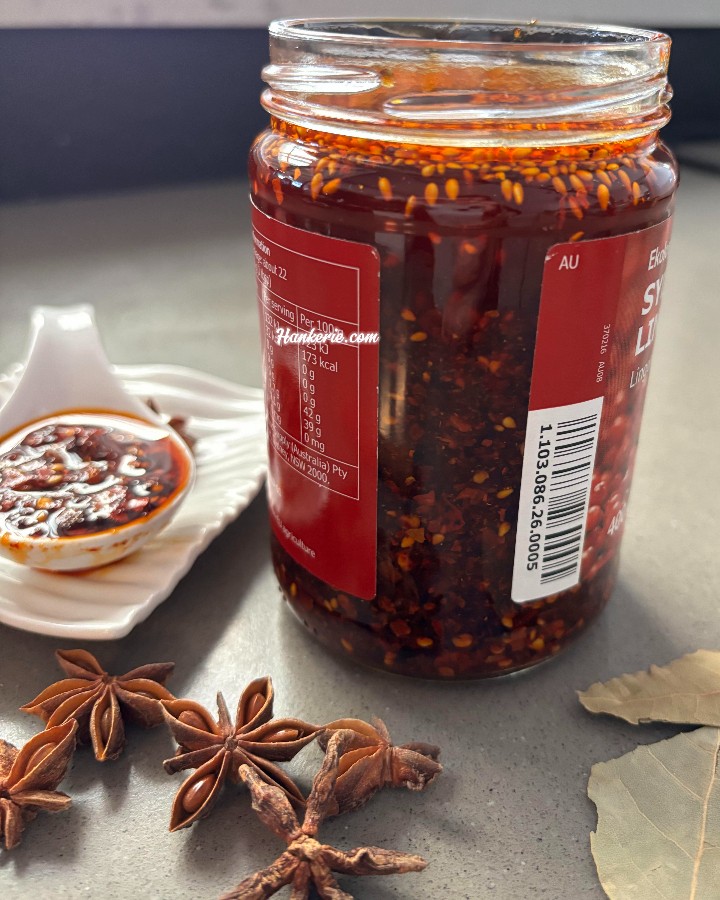
Cinnamon — not the sweet powdered kind we sprinkle on toast, but the real bark, thick and fragrant. In Malaysia, we call it kayu manis, literally “sweet wood.” And it truly is. My mother would snap a stick into her curries, and I can still remember that warm, comforting aroma filling our home. For chilli crisp oil, one stick is enough to whisper its presence into the oil, without overwhelming the chilli.
Then there’s lemongrass. Every Malaysian household has its own relationship with lemongrass — bruised for soups, sliced thin for sambal, or even brewed into tea. When I add bruised stalks to the oil infusion, it’s like a bridge between the fiery chilli and the grounding spices, tying everything together with freshness. Even after I migrated to Australia, I’m still plant lemongrass in my garden.
And of course, dried chilli itself — the backbone of the recipe. In Malaysia, dried chillies are everywhere, from morning markets to kitchen jars. Some are long and glossy, others short and wrinkled. For this recipe, I like to mix flakes with a touch of Korean gochugaru. The gochugaru adds a vivid red colour and a subtle fruitiness, while the regular chilli flakes bring the Malaysian-style heat. Together, they create not just spice, but beauty in the jar.
These are more than ingredients. They’re memories. They’re little sensory postcards from my past, carried forward into your kitchen.
When I make this chilli crisp oil, I like to think of it as bottling up those stories — the laughter at family tables, the steam rising from hot bowls of wonton soup, the crackle of street vendors frying garlic at midnight markets. When you open your own jar, you’re not just tasting heat — you’re tasting heritage.
And that’s why I insist: this isn’t just chilli oil. This is Malaysian-spiced chilli crisp oil. Unique, bold, fragrant, and deeply comforting.
Let’s begin with the chilli itself — because without it, there is no chilli oil.
When I was little, my earliest memory of dried chillies wasn’t in oil, but in curry. My mother would snip whole dried chillies with a pair of kitchen scissors, soaking them in hot water before blending them into a fiery red paste with shallots, garlic, and belacan. I used to stand by her side, mesmerized by the way the deep maroon pods softened in the water, their seeds escaping like little white flecks. Sometimes, she would hand me one and warn, “Don’t touch your eyes.” Of course, I learned the hard way once — and only once.
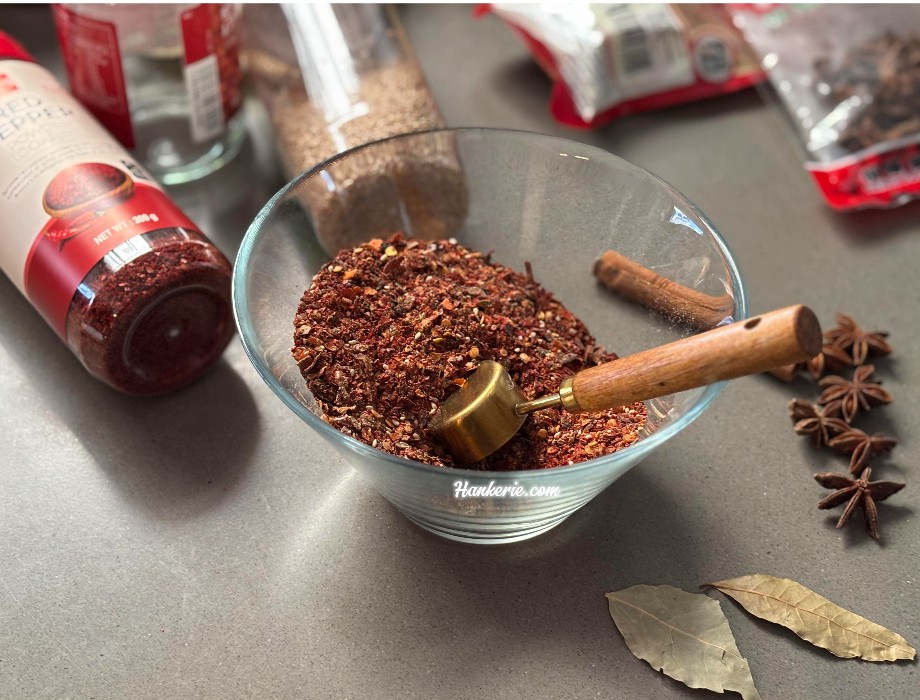
For chilli crisp oil, I don’t use whole pods but flakes. Flakes give us that beautiful, even distribution of colour and crunch. The secret, though, is mixing types. Standard chilli flakes bring the kind of heat that wakes up your palate. But when you mix them with gochugaru — the Korean red pepper flakes that are slightly fruity, slightly smoky, and brilliantly red — the effect is transformative. It’s like painting with two shades of red instead of one; the colour deepens, the flavour becomes layered.
Every time I open my jar of homemade chilli oil and see those tiny flakes suspended in golden-red oil, I’m reminded of this lesson: the beauty is in the blend.
Now, let’s talk about sesame seeds. At first glance, they seem almost insignificant — just tiny little seeds. But sesame has been part of my life since childhood in Malaysia. I remember buying sesame seed-studded buns from the local bakery, their nutty fragrance hitting me before I even took a bite. Sesame seeds were always there, in snacks, in sweets, in savoury stir-fries.
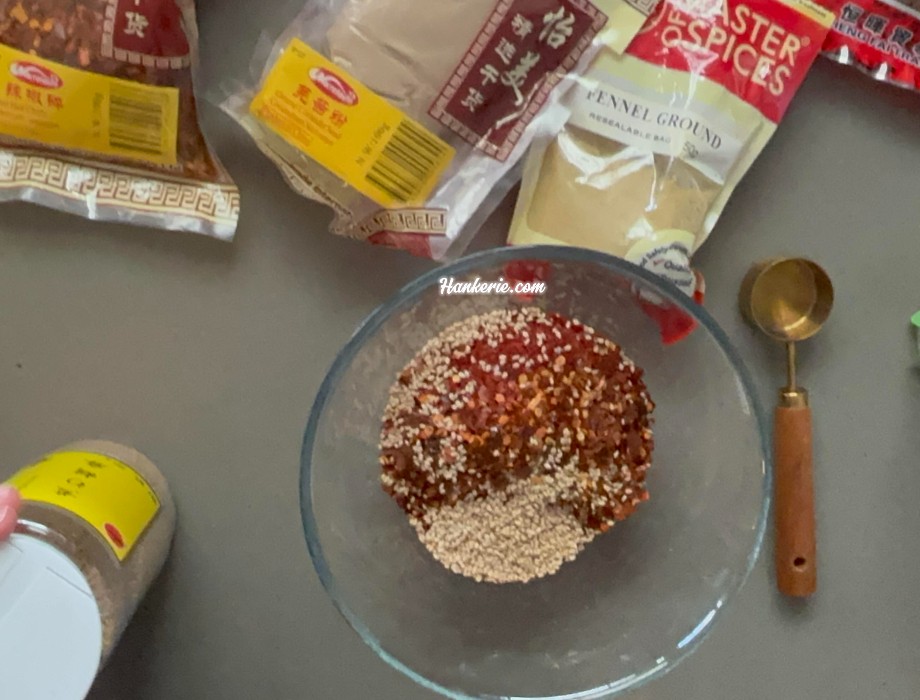
In chilli crisp oil, they play a quiet but important role. When the hot oil hits the chilli and spice mixture, the sesame seeds toast instantly, releasing their nutty perfume. That fragrance lingers, subtle but unmistakable, and every little crunch you get in a spoonful of chilli oil owes something to them.
Then comes coriander. Not the leaves — though those have their own place in Malaysian cooking — but the seeds, ground into a powder. Coriander has this earthy, citrusy warmth that feels like the spice equivalent of a hug. In Malaysia, we grind it fresh for curry pastes, often mixing it with fennel and cumin. In chilli oil, coriander adds depth. Without it, the chilli flakes can taste one-dimensional — hot but hollow. With coriander, they become round, full-bodied, almost fragrant in a way that lingers on your tongue.
And fennel — oh, fennel is the unsung hero. I still remember the first time I understood its power. I was at a friend’s Deepavali open house, and her mother made a spiced chicken curry. It had this slightly sweet, almost anise-like aroma that I couldn’t place. When I asked, she smiled and said, “It’s the fennel. Always the fennel.” Since then, I’ve never looked at it the same way. In chilli crisp oil, fennel balances the heat with its gentle sweetness, preventing the oil from being too aggressive. It whispers instead of shouts, and yet you’d notice if it were missing.
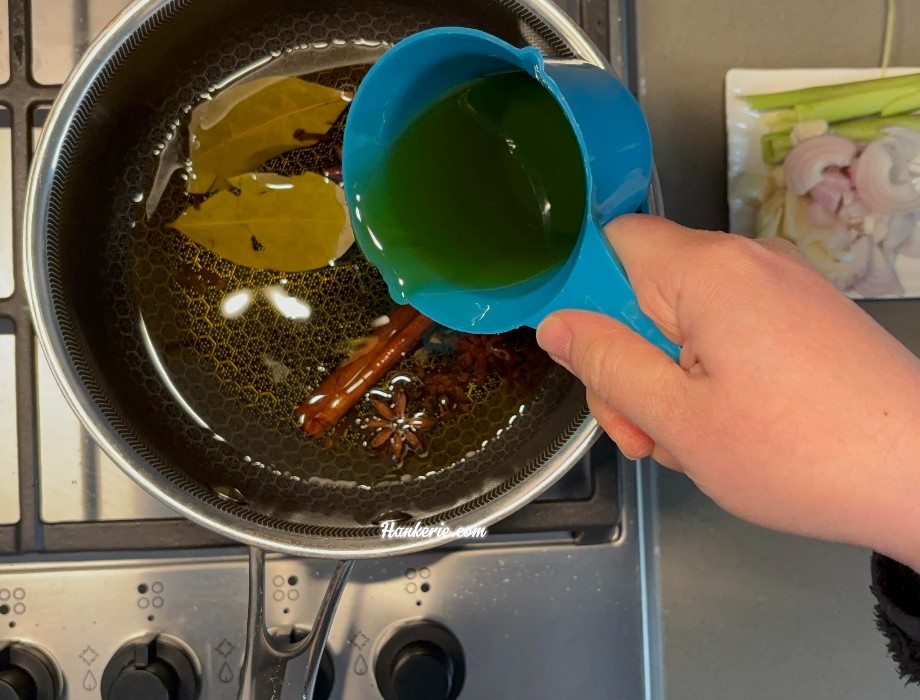
Now, let’s move to the aromatic oil infusion. This is where Malaysian magic really happens.
Star anise is the first player. Shaped like a star, dark and woody, it’s one of those spices that looks as beautiful as it tastes. Drop it into hot oil, and it releases its deep, liquorice-like perfume. Too much, and it overwhelms. Just enough, and it makes the oil mysterious, complex, addictive.
Cinnamon, or kayu manis, brings its sweetness. In Malaysia, cinnamon is not just for desserts — it belongs in savoury cooking just as much. The stick you add to the oil doesn’t dominate, but it creates a background warmth, the kind that makes you want another spoonful even when your tongue tingles from the chilli.

Bay leaves, or daun salam when you want to make it truly authentic, add a herbal layer. Bay leaves are like a quiet guest at a dinner party — you don’t always notice them, but without them, the conversation feels flat.
Whole cloves come next, small but mighty. Cloves remind me of nasi minyak, the fragrant rice served at Malay weddings. One tiny bud carries such a punch of aroma. In chilli oil, cloves bring a sharp, almost medicinal warmth that cuts through the richness of the oil.
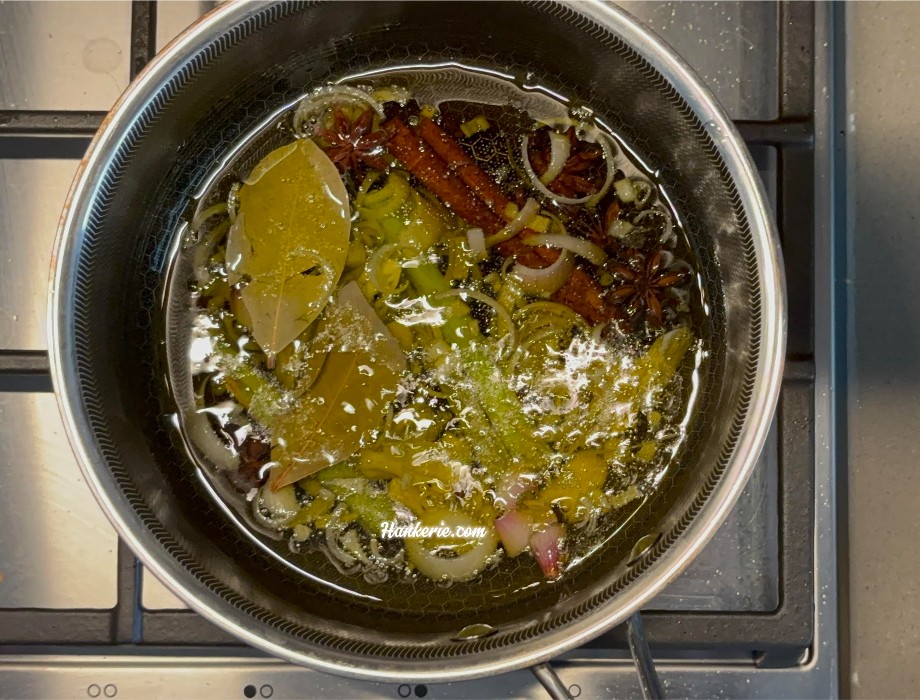
Then comes lemongrass. If Malaysia had a scent, it would be lemongrass. Citrusy, grassy, refreshing. Every time I bruise a stalk with the back of my knife and drop it into the oil, I feel like I’m back in my mother’s garden in Penang, where lemongrass grew wild and strong. It ties everything together, keeping the oil from being too heavy.
Shallots and garlic are the final, essential touch. In Malaysia, we fry them for everything — crispy shallots on top of nasi lemak, golden garlic oil drizzled over blanched vegetables. Their perfume is the smell of home. When sliced thin and slowly cooked in oil, they turn golden, crisp, and utterly irresistible. Their flavour infuses the oil, and their crunchy bits add that signature “crisp” we crave in chilli crisp oil.
By now, if you’ve been imagining these ingredients as I describe them, you can already smell what’s coming. The warmth of cinnamon, the sweetness of fennel, the citrus lift of lemongrass, the nuttiness of sesame, the deep perfume of garlic. Together, they create a tapestry of flavour that is unmistakably Malaysian.
And the best part? All of this magic fits into one jar.
The first step is to wake up the spices.
I set a medium-sized saucepan on the stove, the flame turned low, and I scatter in the whole spices: five star anise, a thick stick of cinnamon, two bay leaves, and a teaspoon of cloves. At first, they sit quietly in the dry pan, but within a minute, the transformation begins. The cinnamon warms and releases its sweetness, the star anise opens up like perfume, and the cloves let out a sharp, spicy edge. If you close your eyes, you could almost imagine you’re walking through a Malaysian spice market, every stall selling something fragrant, the air heavy with the mingling aromas of earth and fire.
I always say this step is more about patience than technique. Don’t rush it. Keep the heat low, and let the spices talk to you. When the fragrance rises and you find yourself leaning over the pot just to inhale, you know they’re ready.
Now it’s time for the oil.
I pour in two cups of olive oil, and instantly the spices sigh as if they’ve been waiting for this embrace. The oil bubbles softly around them, coaxing their flavours into liquid gold. I add the bruised lemongrass stalks, sliced shallots, and thinly sliced garlic. This is the moment when your kitchen starts to smell incredible — a mix of sharp garlic, sweet shallot, and the mysterious blend of cinnamon and star anise.
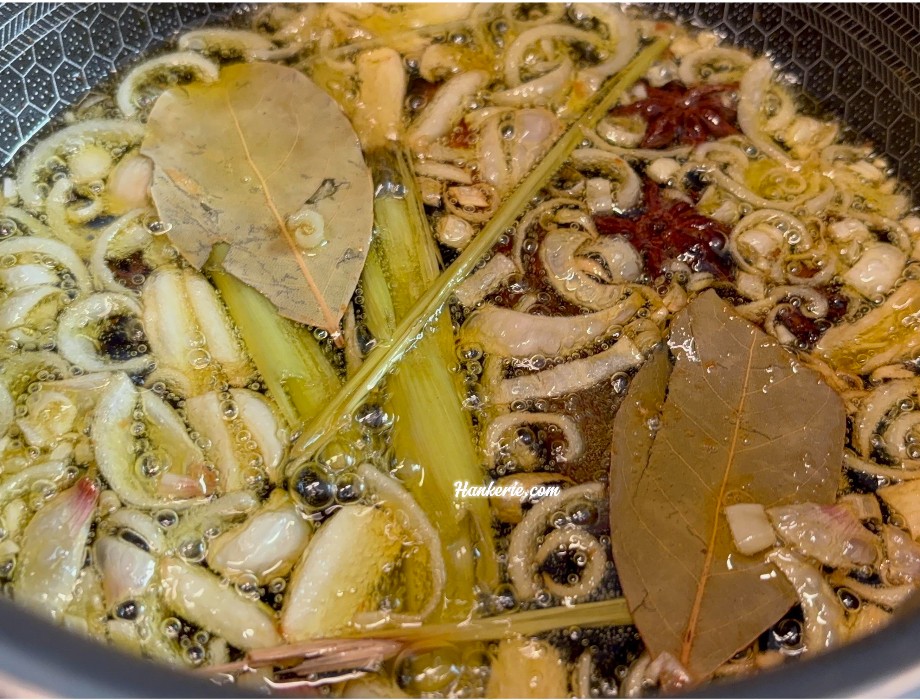
The trick here is gentleness. Too high a flame, and you’ll burn the aromatics. Too low, and they’ll just sit in oil without giving you their best. Medium-low is perfect. You want to see the tiniest bubbles clinging to the garlic slices, rising lazily to the surface. Slowly, the shallots and garlic begin to transform. First pale, then golden, then just on the edge of crisp. It takes about 15–20 minutes, but it’s worth every second.
There’s a moment — and if you’ve cooked long enough, you’ll recognize it — when the shallots and garlic are just right. The edges are golden-brown, the slices stiff and almost floating in the oil, and the fragrance is so mouthwatering that you’ll be tempted to scoop one out and taste it. (I always do. Cook’s privilege.) At this point, the oil has absorbed every nuance of the spices, becoming fragrant and full of promise.
While the oil infuses, I prepare the chilli base. In a large, heatproof bowl, I combine one cup of dried chilli flakes (half standard, half gochugaru for colour and balance), a tablespoon of white sesame seeds, a tablespoon of ground coriander, and a tablespoon of ground fennel. The colours are stunning — deep red flecks, pale sesame, and golden powders. I give them a stir, and the mixture already looks like the beginning of something powerful.
Here comes the moment I always wait for — the dramatic part.
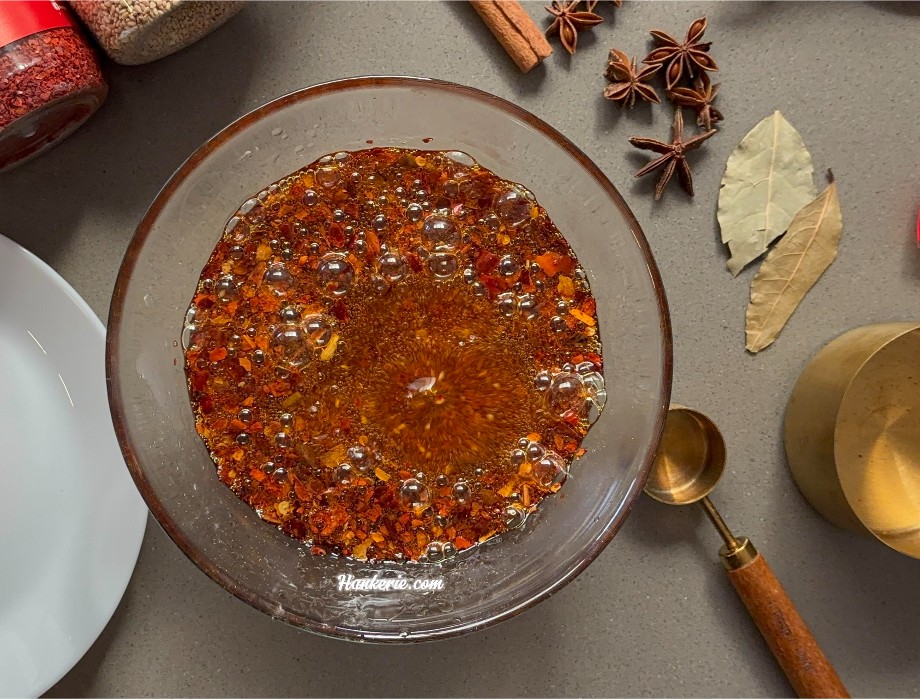
I increase the heat under the oil just slightly, bringing it up to 135–150°C (275–300°F). If you don’t have a thermometer, don’t worry. The old kitchen test works just fine: drop in a single chilli flake. If it sizzles immediately, the oil is ready.
Now, carefully — and I mean carefully — I pour the hot oil through a fine-mesh strainer directly into the bowl of chilli flakes and spices.
The reaction is instant and spectacular. The chilli flakes sizzle and bubble furiously, releasing a smoky, spicy perfume that rushes through the kitchen. The sesame seeds crackle, the coriander and fennel toast on the spot, and the whole mixture seems to come alive. This is the sound of flavour being born.

I always pause here, spoon in hand, just to watch. It’s like a living thing — bubbling, hissing, glowing red. Stirring the mixture is essential, making sure every flake of chilli is bathed in hot oil. The fragrance is intoxicating, a perfect balance of heat, spice, nuttiness, and warmth.
Then comes the waiting game. I let the mixture cool completely at room temperature. This is when the flavours deepen and meld, when the heat of the oil softens into richness, and when the crisp bits — garlic, shallot, sesame — settle into their crunchy final form.
Once cooled, I transfer everything — oil and solids together — into a clean glass jar. The jar itself is a jewel: red and gold, flecks suspended in amber, glistening with promise. When I tighten the lid and set it aside, I feel a sense of satisfaction that’s hard to describe. This isn’t just cooking. This is bottling joy.
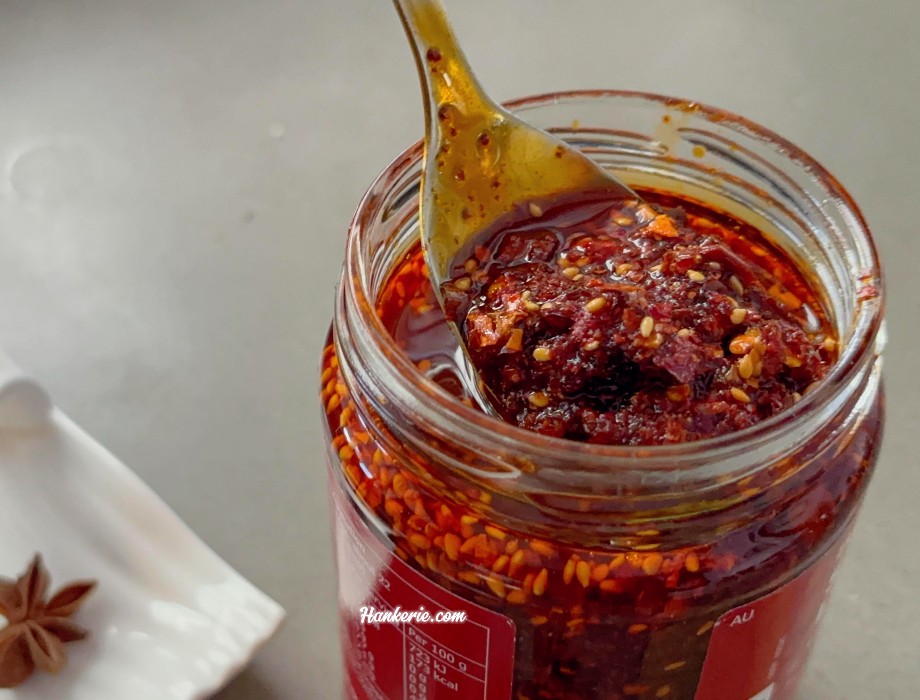
The chilli crisp oil is now ready. It can sit at room temperature for up to a month, or in the fridge for longer — though in my kitchen, it never lasts that long.
Every time I open the jar, I’m greeted with the same fragrance that filled my childhood kitchen in Malaysia: spice, garlic, sesame, and heat. And every time I spoon it over silky tofu, dumplings, or wontons, I’m reminded of why I started making it in the first place — to carry home with me, wherever I am.

How to Make Super Delicious Chilli Crisp Oil with Malaysian Spices
Course: Lunch, Dinner, SauceCuisine: MalaysianDifficulty: Easy4
servings30
minutes40
minutes300
kcalIngredients
- For the Chilli & Spice Base
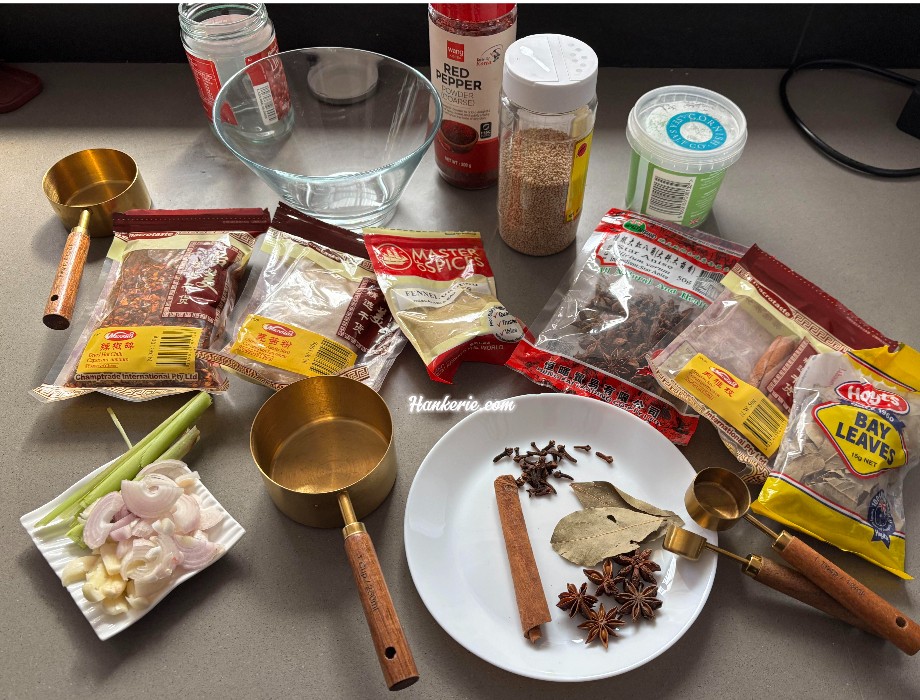
1 cup (100g) Dried Chilli Flakes (a mix of standard flakes and Gochugaru is great for colour and heat)
1 tbsp White Sesame Seeds
1 tbsp Ground Coriander
1 tbsp Ground Fennel
- For the Aromatic Oil Infusion
2 cups (500ml) Olive Oil
5 whole Star Anise
1 large Cinnamon Stick
2 Bay Leaves (or Daun Salam for a more authentic touch)
1 tsp Whole Cloves
1 stalk Lemongrass, bruised and cut into 2-inch pieces
1 large Shallot, sliced thinly
4 cloves Garlic, sliced thinly
Directions
- Toast the Whole Spices: In a dry, medium-sized saucepan over low heat, add the star anise, cinnamon stick, bay leaves, and whole cloves. Toast for 1-2 minutes until they become fragrant. This step awakens their essential oils.
- Infuse the Oil: Pour the 2 cups of olive oil directly into the saucepan with the toasted spices. Add the lemongrass pieces, sliced shallot, and sliced garlic.
- Slowly Heat: Keep the heat on medium-low. The goal is to gently infuse the oil, not deep-fry the aromatics. Let the oil come to a gentle, steady bubble for about 15-20 minutes. Stir occasionally. The shallots and garlic will slowly turn a beautiful, pale golden-brown and become crispy, and your kitchen will smell incredible.
- Prepare the Chilli Base: While the oil infuses, combine the chilli flakes, white sesame seeds, ground coriander, and ground fennel in a large, heatproof bowl. Mix well and set it near your stove.
- Strain and Pour: Once the oil has infused, increase the heat slightly until it reaches 135-150°C (275-300°F). If you don’t have a thermometer, drop a single chilli flake in; it should sizzle immediately. Carefully pour the hot oil through a fine-mesh strainer directly into the bowl with the chilli and spice mixture. It will sizzle and bubble vigorously—this is the sound of flavour being created! Stir everything with a heat-safe spoon to ensure all the chilli flakes are submerged and toasted by the hot oil.
- Cool and Store: Allow the chilli oil to cool completely at room temperature. As it cools, the flavours will deepen and meld. Once cooled, transfer the oil and all the crunchy solids into a clean jar. It can be stored at room temperature for up to a month, or in the refrigerator for several months.
Recipe Video
Notes
- Mix regular chilli flakes with gochugaru for colour and balanced heat.
- Toast whole spices like star anise, cinnamon, cloves, and bay leaf before adding oil.
- Ground coriander and fennel add extra warmth and aroma.
- Slice garlic and shallots thinly and cook on medium-low to avoid burning.
- Add bruised lemongrass to balance the oil with freshness.
- Heat the oil until hot and pour carefully over the chilli flakes to create the signature sizzle.
- Crispy garlic, shallots, sesame seeds, and optional peanuts give crunch and flavour.
- Store at room temperature for up to one month or in the fridge for longer.
- Use on tofu, dumplings, wontons, noodles, rice, eggs, or avocado toast.
- Stir before each use to mix the oil with all the crunchy bits for maximum flavour.
The beauty of chilli crisp oil is that it doesn’t just sit prettily in a jar. It comes alive when it meets food.
The first thing I always reach for is silky tofu. There’s something about the contrast that makes this pairing timeless: the softness of chilled tofu against the fiery crunch of chilli oil. I remember the first time I tasted this combination. It was in a small hawker stall tucked away in a Penang alley, where the aunty served plain blocks of tofu, cold and trembling, topped with soy sauce, scallions, and a spoonful of her house-made chilli oil. It looked so simple, almost plain, but the first bite was a revelation. The tofu was like cream, neutral and soft, and then suddenly — heat, crunch, spice, perfume. The chilli oil wrapped around the tofu like a fiery silk robe. Since then, I can never eat plain tofu without reaching for my jar.
Then, of course, there are dumplings. Oh, dumplings. Little pockets of joy, folded with care and steamed until tender. In Malaysia, dumplings aren’t as common as in China, but when I first made friends from Hong Kong and Taiwan, I was invited to dumpling-making nights. Everyone gathered around the table, folding, chatting, laughing, the kitchen filling with steam. But what struck me most wasn’t the dumplings themselves — it was what they served them with. A dipping sauce of black vinegar, soy, and a generous spoonful of chilli oil. I remember dipping my first dumpling in and watching the oil cling to its skin, red and glistening. The first bite? Magic. The juice of the dumpling filling met the chilli crisp’s smoky crunch, and I thought, Why didn’t I grow up eating this? Now, I make dumplings or wonton often, and my chilli oil always sits proudly beside them.
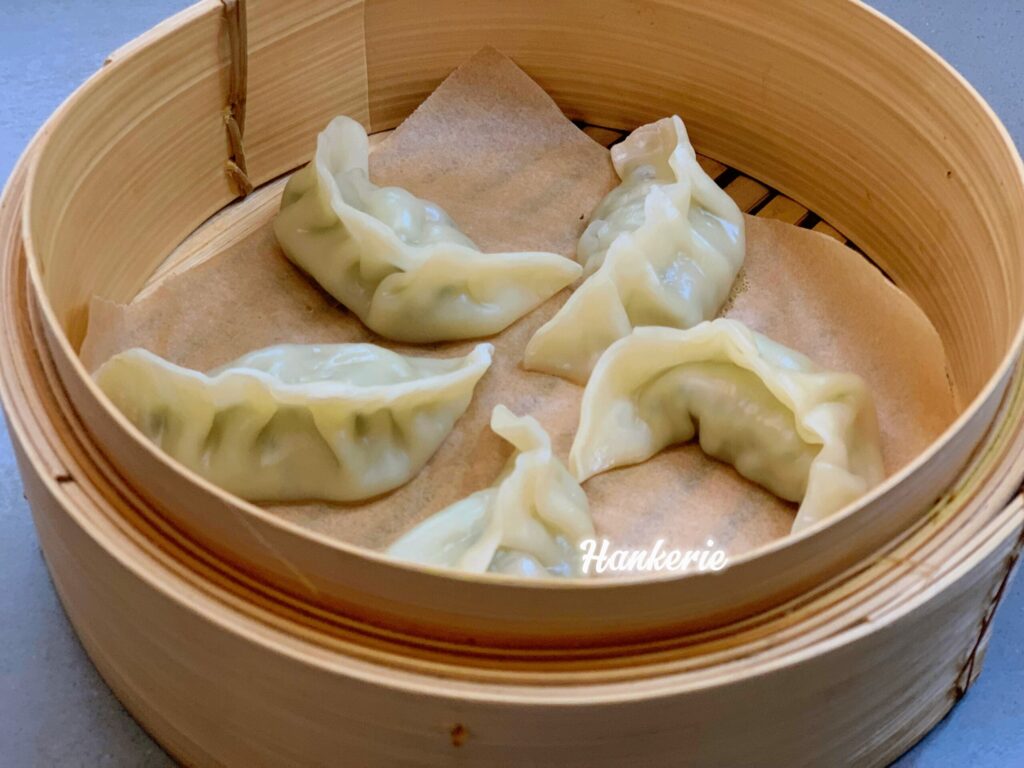
Wontons, too, have their place in this story. Malaysian wontons are usually served in soup, floating in a clear broth with noodles and leafy greens. But I’ll let you in on a secret: toss them in chilli crisp oil, and they become something else entirely. Wonton in chilli oil is a dish that makes me weak in the knees. The soft dumpling skin soaks up the oil, the sesame crunch clings to its folds, and the spices seep into the filling. It’s messy, addictive, and absolutely irresistible.
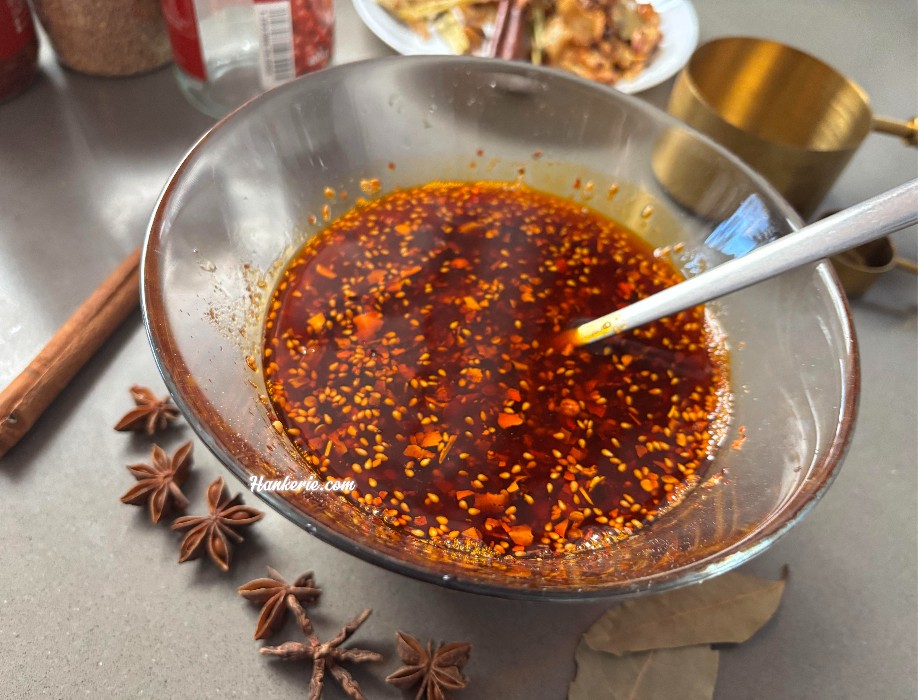
But chilli crisp oil doesn’t stop there. It’s a condiment that insists on versatility. Spoon it over hot jasmine rice, and suddenly that humble bowl becomes a meal. Stir it into noodles, and you’ve got a midnight supper that tastes like the hawker stalls of Kuala Lumpur — smoky, fiery, comforting. Drizzle it over fried eggs, and breakfast is transformed. Even pizza — yes, I once drizzled chilli crisp oil over a slice of margherita pizza, and it was so good I never looked back.
One of my quirkiest experiments was with avocado toast. I was in Sydney, craving something spicy but had only bread, avocado, and my jar of chilli oil. I spread the avocado thick, sprinkled salt, and spooned chilli crisp oil on top. The combination blew me away. Creamy, crunchy, spicy, rich. It was fusion without trying to be fusion.
And let’s not forget congee. Growing up, congee was comfort food — soft rice porridge, served when we were sick or when the weather turned rainy. It was plain, yes, but always served with toppings. Sometimes fried shallots, sometimes soy sauce, sometimes salted egg. But add chilli crisp oil, and congee transforms from comfort food to luxury. Each spoonful becomes a dance between bland and bold, soft and crunchy, mild and fiery.
These serving ideas are not just recipes — they are stories. They remind me of nights when my father would come home late from work and we’d sit at the table with just rice, fried egg, and a jar of chilli oil between us. Or mornings when the rain poured down in Penang, and my mother would ladle steaming congee into bowls, topping them with fried shallots and chilli oil. Or the first time I hosted friends in Sydney and served dumplings with my Malaysian-spiced chilli oil — and watched their faces light up with surprise.
Every jar of chilli crisp oil you make isn’t just for one dish. It’s for endless possibilities. It’s for the tofu, the dumplings, the wontons. It’s for the rice, the noodles, the pizza, the eggs. It’s for all the meals when you want to turn something ordinary into something unforgettable.
Because that’s the magic of chilli oil: it doesn’t just sit on top of food. It changes the food, elevates it, and brings it to life.
Once your chilli crisp oil has cooled and settled in its jar, the journey doesn’t end — it’s only beginning. The first time I made a batch and tucked it into a glass jar, I felt like I was sealing a memory. The deep red flecks suspended in golden oil looked almost jewel-like. I would sometimes lift the jar to the light, watching the solids glisten, imagining them dancing in slow motion.
Room Temperature Storage:
For everyday use, chilli crisp oil can be kept at room temperature in a cool, dark spot for up to one month. I always place mine on the kitchen counter, away from direct sunlight. Each time I open the jar, the aroma greets me — warm, spicy, slightly sweet, and irresistibly nutty. Over days, the flavours continue to meld. The heat from the chilli softens, the garlic and shallots release more of their crunch and aroma into the oil, and the spices deepen, becoming richer and more complex.
Refrigeration:
If you want your chilli crisp oil to last longer — several months — refrigeration is your best friend. I store mine in the fridge during the hotter months, and while the oil firms up slightly when cold, the taste is just as bold when brought back to room temperature. Pro tip: take it out 30 minutes before use so the oil softens, letting all the flavours shine.
Evolution of Flavour:
The magic of homemade chilli oil is that it doesn’t stay static. Day by day, the flavours develop. On the first day, the heat is sharp and bright; by day three, it’s mellowing into a rich, fragrant depth. By the end of the first week, the garlic and shallots have fully infused the oil, giving each spoonful a crispy, golden crunch that’s irresistible. If you’re patient and let it sit for two weeks, the spice aroma becomes almost smoky, layered, and utterly addictive.
Jars & Presentation:
I love using simple glass jars, the kind that you might have collected from jams or preserves. Clear glass lets you admire the vibrant red-orange of the chilli oil, a visual reminder of the heat and love inside. Cleanliness is key — always use sterilized jars and dry spoons to scoop out the oil to prevent contamination.
Common Mistakes to Avoid:
- Burning the aromatics: Keep the heat low while infusing oil; burnt garlic tastes bitter.
- Moisture: Any wet spoons or bowls can cause the oil to spoil faster.
- Sunlight exposure: Direct light can dull the colour and flavour over time.
Every time I open a jar of chilli crisp oil I’ve stored, I’m reminded of the kitchen aromas of my childhood in Malaysia — the lemongrass from the garden, the cinnamon from the spice rack, and the sizzling sound of garlic frying. It’s more than just a condiment; it’s a little jar of memories, waiting to transform a simple meal into something extraordinary.
And so, the jar sits on my kitchen counter, glowing like a little treasure, filled with the memory of home, the warmth of spices, and the fiery passion of chilli. Making chilli crisp oil is more than following a recipe; it’s a journey through Malaysia’s vibrant culinary history, through the scents and textures of my childhood, through the careful patience of infusing oil and toasting spices to perfection.
Every spoonful tells a story: the soft whisper of lemongrass, the sweet warmth of cinnamon, the deep perfume of star anise, the gentle crunch of sesame, the boldness of chilli, and the earthy touch of fennel and coriander. It’s a symphony of flavour that transforms even the simplest food into a celebration.
As I drizzle it over silky tofu, toss it with dumplings, or spoon it onto rice, I am reminded why I started this journey. This chilli crisp oil is not just a condiment; it is a bridge — between past and present, between Malaysia and wherever your kitchen may be, between the everyday and the extraordinary.
Whether you make it for yourself, for family, or for friends, it carries with it a little piece of love, history, and magic. And just like that, a humble jar of oil becomes so much more: a conversation starter, a comfort, a memory, a signature flavour that will make everyone ask, “Who made this?”
So, go ahead. Make your jar. Listen to the sizzle. Smell the fragrance. Taste the heat. Let your kitchen fill with the joy and nostalgia that only a truly perfect chilli crisp oil can bring. And remember: in every drop, every crunchy flake, there is a story — yours to continue, one meal at a time.
Other Video Recipes
🔥 Get more delicious cooking recipes episode in this Hometown Food Cooking Series! ➡️ https://youtube.com/playlist?list=PLe50YKtSlHF62Msd7Kn1MxoNtoZ5sVRSq&si=OU6yCzbGuMeYbygH
🔥 Ultimate Sambal Chillies Recipe ➡️ https://youtu.be/jI2r_ASlHtA
Pairing with:
🔥 Get more delicious crispy fried wonton recipe! ➡️ https://youtu.be/sxgLo0govI4?si=OQTcTvoDPCX5xiwP
🔥 Miso Chicken Dumplings 2 Ways (Air Fried or Steam) 味噌鸡肉饺子 (空气炸或蒸) ➡️ https://youtu.be/XYinbuDf-Yo